China’s First-Tier Cities Witness Sustained Recovery in Real Estate Market
Since April, the real estate market in China’s first-tier cities has continued its “spring recovery” trend, maintaining a booming transaction momentum. The warm market performance reflects the phased release of housing demand and the initial stabilization of the real estate sector, bringing positive signals to the industry.
In the new housing market, data from the Beijing Municipal Commission of Housing and Urban-Rural Development shows that as of April 18, the cumulative online signed volume of new housing in Beijing in April reached 4,444 units, exceeding the total online signed volume of new housing in March. Data from Shanghai Real Estate Network indicates that as of the same date, the cumulative online signed volume of new housing in Shanghai in April was 5,311 units, a slight increase compared with the same period in March (5,084 units).
The second-hand housing market also maintained considerable vitality. As of April 18, Beijing’s cumulative online signed volume of second-hand housing in April reached 9,916 units, compared with 9,783 units in the same period in March. Shanghai’s cumulative online signed volume of second-hand housing in April was 16,503 units, basically the same as the same period in March.
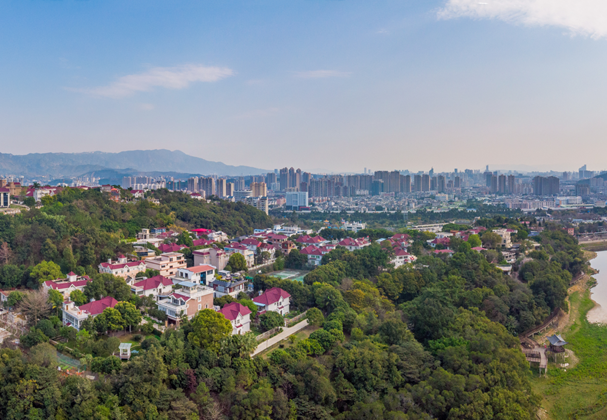
Li Yujia, chief researcher at the Guangdong Provincial Housing Policy Research Center, said, “The trend of the real estate market in key cities in April has continued the recovery momentum in March, and the overall transaction situation remains relatively strong.” He added that while the second-hand housing transactions in key cities such as Beijing, Shanghai and Shenzhen remain active, new housing transactions have also started to improve.
Cao Jingjing, general manager of the Index Research Department of China Index Academy, noted, “After the Spring Festival, with the continuous release of housing demand, the real estate market in first-tier cities has achieved a certain degree of recovery, with second-hand housing transactions continuing to outperform new housing, and Beijing and Shanghai took the lead in warming up.” She believes that the core factors driving the “spring recovery” are the accelerated entry of demand after the Spring Festival, the superposition of the traditional peak season and the school district housing enrollment window period, as well as the previous continuous housing price correction that brought many properties into the affordable range for rigid demand.
Rigid demand remains the main support for the second-hand housing market. China Index Academy data shows that in the first quarter of this year, second-hand housing with a total price of less than 3 million yuan accounted for 42.8% of transactions in Beijing, an increase of 5.7 percentage points compared with the whole of 2025, and the transaction volume increased by 16% year-on-year.
Goldman Sachs recently released a report stating that the real estate markets in Shanghai and Shenzhen may bottom out by the end of this year, with a recovery time 6 to 24 months earlier than other first-tier and second-tier cities. Goldman Sachs predicts that housing prices in Shanghai and Shenzhen will rise by 15% between the end of 2025 and the end of 2028. China Net reported that Goldman Sachs has been optimistic about the stabilization of China’s housing prices and the investment opportunities of developers with strong sales channels.
Li Yujia suggested that at the policy level, the “old-for-new” program for second-hand housing could be promoted in the future to smooth the chain between purchasing second-hand housing and replacing with new housing. Local governments could also strengthen the systematic integration of housing preferential policies and financial subsidies to reduce the cost for young people to settle in cities.