Middle East Ceasefire Brings Temporary Calm, But Global Economic Risks Linger
After more than a month of silence, Jerusalem’s Old City has regained its vitality, and Tel Aviv’s beaches are crowded with people engaging in sports and leisure, savoring this “momentary peace”. Along with the temporary ceasefire reached between the US and Iran, commercial activities in the Middle East have shown signs of recovery. Meanwhile, international crude oil prices have pulled back from their peaks, and sentiment in global financial capital markets has gradually stabilized.
However, undercurrents still surge beneath the calm, and market worries about the future have not been completely eliminated. The upward shift in the oil price hub is irreversible, and with “energy prices” as the core variable, rising costs are spreading step by step along the industrial chain to broader economic fields, meaning the far-reaching impact of the conflict on the global economy may have just begun to emerge.
Since the outbreak of the US-Israel-Iran conflict, the Strait of Hormuz, which controls about 20% of the world’s oil and gas transportation, has been nearly closed, pushing energy prices to soar sharply. Although oil prices have fallen from their highest points, they remain at a relatively high level compared with pre-conflict levels. Since the US and Israel launched attacks on Iran at the end of February, New York crude oil futures prices have surged from below $70 per barrel at the end of February to above $110 per barrel in early April, while London Brent crude oil futures prices have risen from around $70 per barrel at the end of February to about $100 per barrel currently.
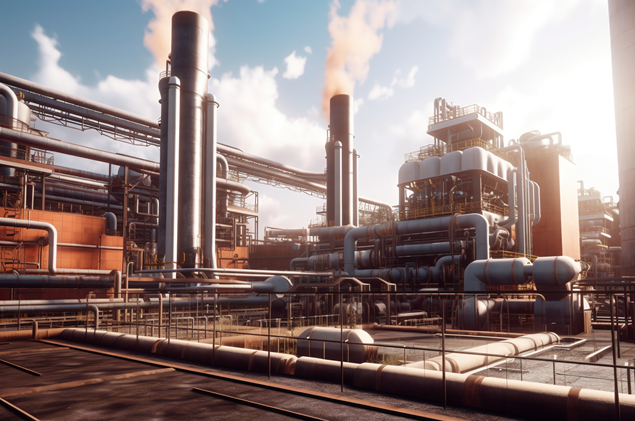
Meanwhile, Qatar’s energy facilities have fully suspended liquefied natural gas (LNG) production after being attacked by drones, taking nearly 20% of the world’s LNG export capacity offline, further exacerbating the tight global energy supply and driving LNG market prices sharply higher. Morgan Stanley stated in a recent research report that the global LNG supply gap will be about 15 million tons in 2026, accounting for about 4% of global supply, and holds a bullish view on LNG prices in 2026, significantly higher than the forward curve forecast.
Juhi Dawan, macro strategist at Wellington Management, said, “Even if the strait reopens, the damage to production and infrastructure, including Qatar’s LNG facilities, may keep energy prices high for a longer period.” JPMorgan Chase Commodities Research Team’s latest report shows that more than 60 Gulf energy infrastructure facilities have been affected by drone and missile attacks, with about 50 damaged to varying degrees and at least 8 facing a long repair cycle.
The impact of the conflict has spread to various industries and along the industrial chain. Fatih Birol, Executive Director of the International Energy Agency, warned on April 13 that “this is the most serious energy crisis in history, affecting not only the oil and gas sector but also other key basic commodity areas such as fertilizers, petrochemicals and helium.”
Goldman Sachs Americas Agricultural Equity Research Team reported on April 14 that global urea prices have risen by 50% to 70% since the conflict broke out, as urea production is highly dependent on natural gas. Spot helium prices, a key industrial gas indispensable for chip manufacturing, have risen by up to 40% to 50% due to the shutdown of Qatar’s largest helium production base.
The International Monetary Fund (IMF) raised its global inflation forecast and lowered its global economic growth forecast in the latest World Economic Outlook Report released on April 14. The report noted that if the impact of the Middle East war fades by the middle of this year, the world economy is expected to grow by 3.1% this year, 0.2 percentage points lower than the forecast in January. Zhou Mi, researcher at the Research Institute of the Ministry of Commerce, said the conflict is not conducive to global trade and the continuation of the original low-cost economic growth model.