China’s New Home Appliance Energy Efficiency Standards and Subsidies Reshape Market Landscape
In recent years (2024-2026), a spate of new energy efficiency standards for home appliances has been released and implemented in China, while the 2026 home appliance trade-in policy has been adjusted to require products to meet Level 1 energy efficiency to qualify for subsidies. The combined effect of these standards and national subsidies is reshaping the home appliance market and driving industrial upgrading, according to China Consumer News.
A series of mandatory national standards have been rolled out in phases. The Energy Efficiency Limits and Energy Efficiency Levels for Air Purifiers (GB36893-2024) took effect on October 1, 2025, while standards for refrigerators (GB12021.2-2025) and range hoods (GB29539-2025) will be implemented on June 1 and November 1, 2026, respectively. More standards for smart toilets, washing machines and LED lighting will follow by 2027.
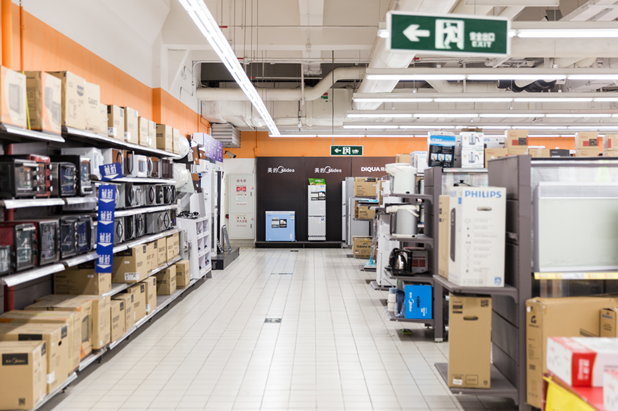
Meanwhile, the Notice on Implementing Large-Scale Equipment Renewal and Consumer Goods Trade-In Policies in 2026, issued by the National Development and Reform Commission and the Ministry of Finance, adjusted the subsidized home appliance categories from 12 to 6 (refrigerators, washing machines, TVs, air conditioners, computers and water heaters), with a uniform 15% subsidy and a maximum of 1,500 yuan for Level 1 energy efficiency products.
"Home appliances are major energy consumers, and the intensive implementation of new energy efficiency standards can effectively reduce overall social energy consumption," experts from CVC Testing Technology Co., Ltd. noted. They added that the standards will eliminate outdated production capacity, regulate irregularities such as false energy efficiency labeling, and guide industrial green upgrading, aligning with consumers’ demand for energy-saving and environmentally friendly products.
The new standards have significantly raised market access thresholds. For instance, the new standard for refrigerators requires an over 20% improvement in energy efficiency, forcing the industry to accelerate technological innovation. High-performance compressors, efficient heat exchange systems and new energy-saving materials are widely adopted, while AI intelligent temperature control and variable frequency technologies are more extensively applied.
Data from Panborui Consulting shows that the market share of Level 1 energy efficiency products has risen from 65.6% in 2023 to 89.0% in March 2026. "The adjusted national subsidies, combined with new energy efficiency standards, are reshaping the market from both industrial and consumer ends," said Jia Dongsheng, General Manager of Panborui Consulting, noting that leading enterprises with sufficient technological reserves will consolidate their dominance.
Experts from CVC Testing Technology Co., Ltd. reminded consumers to choose products based on actual needs, check energy efficiency labels, and calculate the total cost including purchase price and long-term energy bills. For frequently used appliances, Level 1 energy efficiency products are more cost-effective in the long run, while Level 2 products can be a budget-friendly choice for short-term use.