Caoli Zi Town: From Traditional Handicraft to Modern Silk Flower Industry Cluster
No flower seedlings, no seeds, and no gardeners are needed, yet colorful flowers can bloom across seasons and last long. As a major town in China’s silk flower industry, Caoli Zi Town in Wuqing District, Tianjin, currently accounts for about one-third of China’s total market share and over 70% of Tianjin’s market share, with an annual output value of nearly 1.2 billion yuan. According to Tianjin Daily, its products include more than 100 series and nearly 1,000 varieties such as silk flowers, pull flowers and velvet flowers, which are exported to more than 100 countries and regions, making it a veritable "Hometown of Chinese Silk Flowers".
With a long development history dating back to the Ming and Qing dynasties, Caoli Zi silk flower has evolved from a folk craft to an intangible cultural heritage industry that enriches people. In 2013, Caoli Zi silk flower craftsmanship was included in the list of Tianjin’s intangible cultural heritage representative projects, and 71-year-old Li Xiuting is the representative inheritor of this project. "Nowadays, most of the products on the market are industrial chemical fiber silk flowers. Some people often question that machine-made silk flowers lack charm, but I think traditional hand-made and modern silk flowers are essentially artificial flowers, just with different raw materials and craftsmanship," Li said.
Li admitted that traditional silk flower craftsmanship faces challenges in embracing modern technology. Young people tend to operate simple and easy-to-use mechanical equipment due to efficient production brought by technology, while fewer are willing to calm down to learn traditional manual processes such as dyeing, petal shaping and gluing. In addition, traditional products are disconnected from modern market demand, with single shapes and fixed colors, making it difficult to meet consumers’ diverse needs.
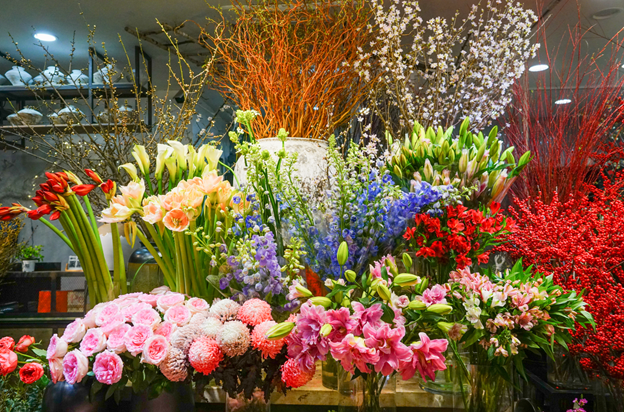
Faced with these challenges, Caoli Zi Town has taken a distinctive path of "protecting craftsmanship with technology and endowing value with craftsmanship". In Shimianzhuang Village, 3D-printed artificial flowers complement hand-made silk flowers. "It used to take half a day to make one peony flower, but now the machine can make hundreds of them in an hour," said 73-year-old Yuan Guangxiang, one of the earliest silk flower craftsmen in the village, who has witnessed the gorgeous transformation of this traditional craft.
At Tianjin Deyi Technology Co., Ltd., various lifelike 3D-printed artificial phalaenopsis are displayed on shelves, with delicate touch and light fragrance. "Our self-developed 3D printing technology can accurately control the thickness and texture of petals, making the simulation degree reach 95%," said Shang Enxiang, general manager of Deyi Technology. "These innovations have helped our new products successfully enter the high-end European market."
To promote the high-quality development of the silk flower industry, Caoli Zi Town has implemented a combination of policy guidance, technological empowerment and platform construction. According to the Caoli Zi Town Government, the town has built a full industrial chain ecological system of "production-e-commerce-logistics" relying on the "dual-engine" development model of the Silk Flower Industry Cultural Park, helping enterprises expand overseas markets through cross-border e-commerce and live-streaming e-commerce.
Tianjin Dongchen Arts and Crafts Co., Ltd. has made its silk flowers available in 80% of countries and regions around the world through cross-border live streaming. "Developing overseas markets requires comprehensive preparation, from English communication to understanding trade rules," said Li Biao, person in charge of Tianjin Shuangqidian Artificial Flower Co., Ltd., adding that 20% of the company’s products are now sold overseas through self-operated channels.
To solve the financing difficulties of enterprises, the Caoli Zi Town Silk Flower Industry Association, established in 2021, has organized "bank-enterprise" forums. Yang Chengli, person in charge of Tianjin Jinmanying Arts and Crafts Co., Ltd., said the 5 million yuan credit from Tianjin Rural Commercial Bank, obtained through such a forum, solved the company’s working capital shortage. By the end of 2025, the bank’s Caoli Zi Sub-branch had issued 52 million yuan in loans to more than 60 enterprises in the silk flower industrial chain.
Li Jian, Secretary of the Party Committee of Caoli Zi Town, said the town will continue to strengthen policy, financial and technological support, promote brand going global, and help Caoli Zi silk flowers become a business card of China’s traditional crafts going to the world.