China's Electric Two-Wheelers Navigate Shift from "Product Export" to "Value Export"
China’s electric two-wheeler industry is currently in a critical transition from "product export" to "value export", with robust growth momentum underpinned by strong international competitiveness. According to China Customs statistics, the export value of China’s electric two-wheelers reached 1.363 billion US dollars in the first two months of 2026, a year-on-year increase of 46.2%, continuing the industry’s long-term growth trend.
From 2015 to 2025, the export value of China’s electric two-wheelers surged from 1.57 billion US dollars to 6.83 billion US dollars, with a compound annual growth rate of 15.8%, according to China Chamber of Commerce for Import and Export of Machinery and Electronic Products (CCCMEC). Despite this impressive performance, hidden concerns linger, including differing technical standards across countries and intensifying competition, pushing the industry to explore new overseas paths driven by intelligence and branding.
Recently, the "Green Silk Road, Intelligent Travel" Tianjin Bicycle and Electric Vehicle Industry Cross-border Cooperation and Procurement Matchmaking Conference, co-hosted by CCCMEC and Tianjin Bicycle and Electric Vehicle Industry Association, was held in Tianjin. The event attracted envoys from Egypt, Turkey, Mongolia and other countries, procurement officials from relevant UN resident agencies in China, and more than 250 enterprise representatives, reflecting the industry’s urgent desire to accelerate global layout.
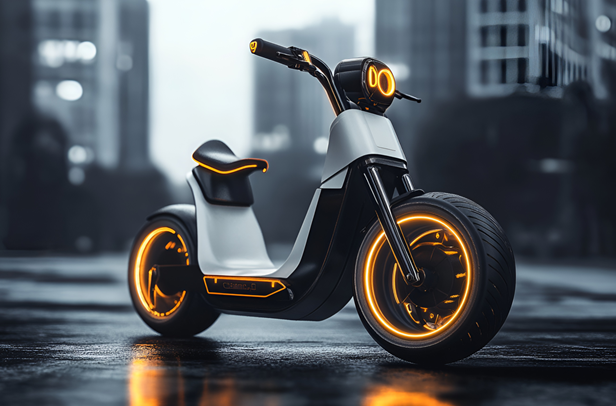
Dialogues at the conference highlighted deep-seated structural difficulties for Chinese enterprises going global. From 2015 to 2025, export volume rose from 6.51 million units to 26.74 million units, while export unit prices continued to decline—a "volume increase but price decrease" trend exposing industry shortcomings. E-scooters and electric balance bikes, with low unit prices, account for the largest share of exports, mainly to Europe and the US.
Other challenges include complex technical standards and certification systems. Developed countries in Europe and the US have high certification thresholds, cumbersome application processes and long cycles. Different standards across regions force enterprises to conduct separate tests and certifications, increasing costs and time. Product adaptation is another hurdle: Southeast Asia’s hot and rainy climate requires waterproof and high-temperature-resistant batteries, while mountainous areas in South America and Central Asia demand long-range, high-power electric motorcycles.
According to the Two-Wheeler Branch of CCCMEC, the industry must pursue intelligence, localization and branding to achieve transformation. For high-end markets, enterprises should focus on e-bikes and intelligent electric motorcycles, popularizing navigation and remote control to boost added value. For emerging markets, building local production and supply chains will help expand market share. Brand building, supported by technology and quality, is key to breaking competition barriers and securing a firm international position.