QatarEnergy Prepares to Resume LNG Production Post-March Attacks, Hinged on Hormuz Access
QatarEnergy is making preparations to restart liquefied natural gas (LNG) production, following a suspension in March 2026 caused by military attacks on its key energy facilities in Ras Laffan and Mesaieed, reported Reuters, citing two informed sources. The company has made initial progress in reactivating some production units, though full resumption remains subject to unimpeded navigational access through the Strait of Hormuz.
Two of the three liquefaction trains at QELNG North 1 (Qatargas-1), Qatar’s pioneering LNG project situated in Ras Laffan Industrial City, have been reactivated, according to QatarEnergy’s latest update. This facility, which boasts three liquefaction trains with a combined annual capacity of around ten million tonnes per annum (mtpa), is a cornerstone of the country’s LNG export infrastructure.
The March 18 and 19 missile attacks by Iran inflicted significant damage on Ras Laffan Industrial City—one of the world’s largest LNG production hubs, accounting for roughly 20% of global LNG output, according to China News Network. The assaults led to a 17% reduction in Qatar’s LNG export capacity, disrupting energy supplies to markets across Europe and Asia, and caused an estimated annual revenue loss of around $20bn (QR72.8bn).
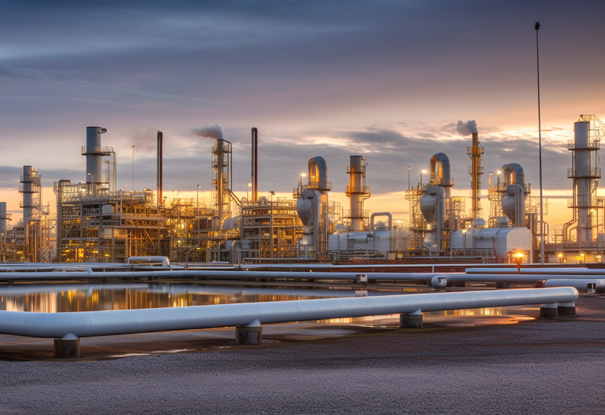
Two specific LNG production units, Trains 4 and 6, sustained severe damage, resulting in a 12.8mtpa drop in output. Repairs to the damaged facilities are expected to take up to five years, the company confirmed, as reported by China Energy Network. Saad Al Kaabi, Qatar’s Minister of Energy Affairs and QatarEnergy’s President and CEO, noted that the repair work would keep the affected offline for 3 to 5 years.
In response to the production disruptions, QatarEnergy revealed plans in March to declare force majeure on several long-term LNG supply contracts, with impacted customers including those in Italy, South Korea, Belgium and China. Mr. Al Kaabi added that the force majeure could last up to five years, depending on the duration of repair work, according to China News Network.
Full LNG production resumption is closely tied to the navigational situation in the Strait of Hormuz. Despite a ceasefire between the United States and Iran, vessel traffic through the strait remains low and tightly controlled, reported China.org.cn, citing a report from London-headquartered maritime analytics firm Windward. The Iranian Navy has warned ships against transiting the strait without Tehran’s consent, and elevated war-risk insurance premiums continue to hinder the return of mainstream commercial shipping.
Separately, QatarEnergy confirmed earlier this month that the Aqua 1, a fuel oil tanker under its charter, was targeted by a missile in Qatar’s territorial waters on the early morning of 1 April 2026. Fortunately, no crew members were injured, and the incident did not cause environmental damage. With partial production units reactivated and repair work underway, QatarEnergy’s resumption efforts are now closely linked to the stabilization of the Strait of Hormuz and the broader regional security situation.