China’s Machinery Industry Booms in 2025, Marching Toward High-End Global Value Chain
BEIJING, April 10 – As a key indicator of a country’s industrialization level and comprehensive national strength, the machinery industry serves as a crucial pillar for building a modern industrial system and developing new quality productive forces. Data released by the China Machinery Industry Federation (CMIF) shows that China’s machinery industry maintained a steady and progressive operation in 2025, achieving positive results in high-quality development, according to People’s Network.
In 2025, the added value of above-scale machinery enterprises increased by 8.2% year-on-year, while the export volume of goods trade reached 986.82 billion US dollars, a year-on-year growth of 13.5%. Amid a complex and severe external environment, China’s machinery industry has demonstrated strong resilience and upgrading potential, standing at a critical stage of transformation from scale-and-speed-oriented development to quality-and-efficiency-oriented development, and steadily advancing toward the mid-to-high end of the global value chain.
China has become a major machinery manufacturing country with a complete range of categories and a large scale, boasting a comprehensive industrial system and global influence in multiple segmented fields. Its current development presents three prominent features: obvious clustering, accelerated emergence of innovation achievements, and full-scale digital transformation.
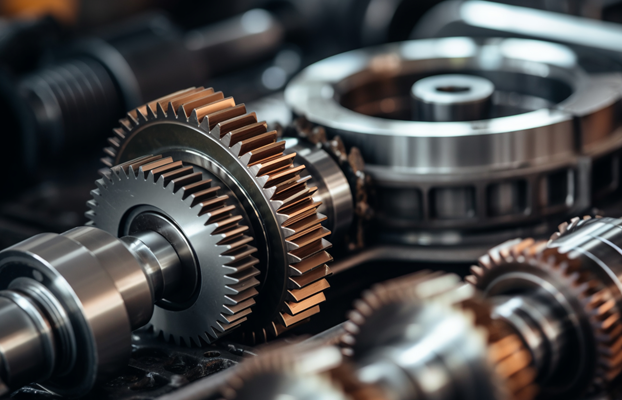
Industries such as construction machinery, power equipment, robots and intelligent connected vehicles have formed several globally competitive industrial clusters in the Yangtze River Delta, Pearl River Delta and central and western regions, continuously improving the efficiency of industrial chain collaboration. In terms of innovation, breakthroughs have been made in major technical equipment such as large shield tunneling machines, 100,000-kilowatt hydropower generating units and UHV power transmission and transformation equipment, with some fields reaching the world’s leading level.
Digital transformation has also been fully launched, with intelligent manufacturing demonstration factories and industrial Internet platforms being promoted at an accelerated pace. The popularization rate of digital R&D and design tools and the numerical control rate of key processes have continued to rise, injecting new vitality into industrial development. For instance, Sany Heavy Industry, a leading construction machinery enterprise, has built intelligent factories integrating digital twins and industrial robots, increasing production efficiency by 35%.
The development paths of the machinery industry in some developed countries provide important reference for China. Germany leads in high-end machine tools and automation equipment relying on its precision manufacturing accumulation, emphasizing “hard” manufacturing and the cultivation of hidden champions, but its digital transformation is relatively prudent. The United States promotes product intelligence and networking by virtue of its advantages in software and chips, but faces the risk of hollowing out in basic manufacturing links.
In contrast, China boasts the world’s largest market, the most complete industrial supporting system and strong engineering capabilities, with outstanding ability to carry out large-scale and low-cost industrial application of technological innovations. “The future competition is that of systems and ecology. China needs to transform its market and system advantages into technological leadership and standard dominance,” said Wang Ruixiang, former president of CMIF.
To advance high-quality development, China is focusing on strengthening innovation-driven development, promoting digital, intelligent and green transformation, optimizing the industrial ecology and expanding opening-up and cooperation. It supports “chain leader” enterprises to take the lead in forming innovation consortia to tackle key core technologies such as high-end CNC systems and precision bearings, and encourages enterprises to “go global in groups” to expand overseas markets.
China’s machinery industry has become a “ballast stone” for stabilizing the industrial economy and a “main force” for promoting industrial upgrading. Its steady development not only lays a solid foundation for building a manufacturing power but also contributes Chinese strength to the global machinery industry’s progress, demonstrating China’s commitment to high-quality development and open cooperation.
热门内容推荐