The Boom of Ear Economy: Reshaping the Landscape of the Publishing Industry
This emerging economic form is naturally compatible with the publishing industry. The application scenarios of the audio market have long exceeded the boundaries of traditional radio, extending to dubbing for film, television, games and animation, audio books, radio dramas, podcasts, audio live broadcasts, virtual idol operations and many other fields. Notably, a large part of the core copyright of these audio contents comes from traditional publishing houses and online literature platforms.
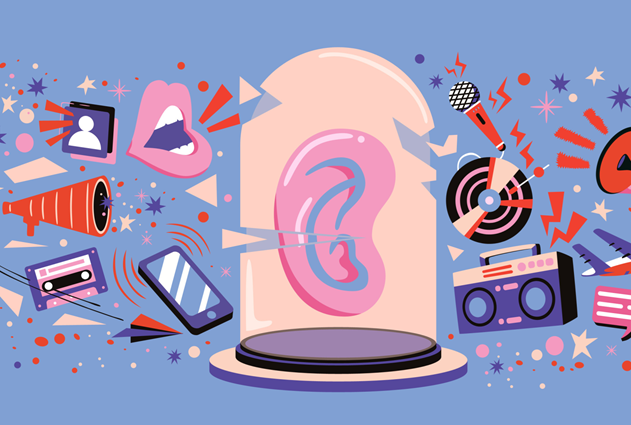
Driven by both policy support and theoretical guidance, the "ear economy" has not only promoted the dual transformation of the supply and demand sides of the publishing industry, but also exerted a profound impact on its development. It reconstructs the revenue structure, optimizes production capacity and reshapes user relationships. For instance, People's Literature Publishing House's high-quality audio book of "A Dream of Red Mansions" has broken the long-standing problem of audience circle solidification in the publishing industry.
Nevertheless, while embracing development dividends, the "ear economy" also brings unavoidable challenges to the publishing industry, including upgraded copyright governance difficulties, intensified content homogenization and unbalanced industry competition. "Copyright disputes over audio derivatives such as narration and sound effects have become frequent due to the lack of unified judicial standards," said Li Wei, director of the Copyright Department of China National Publishing Group.
With the continuous iteration of AI technology, speech synthesis technology will greatly reduce the production cost of audio content, and customized audio products of "one person, one book" are expected to become more popular. Audio platforms are also quietly changing their roles from content producers to more professional content curators, which will inject new vitality into the integrated development of the "ear economy" and the publishing industry.
热门内容推荐