China’s “One-Stop” Quality Infrastructure Services Benefit Over 5.2 Million Enterprises During 14th Five-Year Plan
Recently, the State Administration for Market Regulation (SAMR) released data showing that during the 14th Five-Year Plan period, it has vigorously promoted “one-stop” quality infrastructure services, organically integrating resources such as metrology, standards, certification and accreditation, and inspection and testing. By the end of the period, a total of 2,984 various “one-stop” quality infrastructure service platforms have been built across the country, serving more than 5.2 million enterprise visits, solving about 380,000 technical problems and helping enterprises save approximately 5.47 billion yuan in costs, according to People’s Network.
It is reported that the “one-stop” quality infrastructure services promoted by SAMR have achieved positive results in supporting park economy, regional development, and the quality-linked improvement of industrial chains and supply chains, forming a series of replicable and promotable service models and experiences.

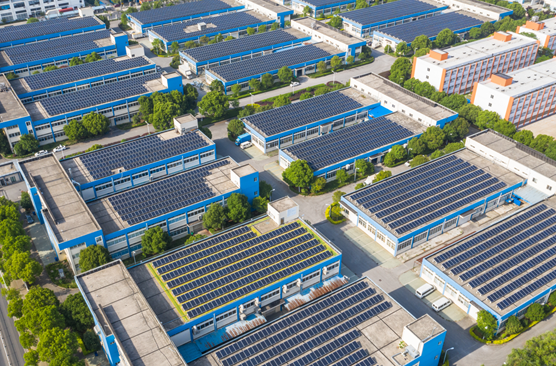
In terms of serving the park economy, local authorities have embedded quality technical services directly into industrial parks, enabling enterprises to obtain professional support such as metrology, standards, inspection and testing, and certification and accreditation without leaving the parks. This has significantly reduced the cost and time for enterprises to access quality services, driving the overall improvement of park development levels. A typical example is Guizhou’s Gui’an New Area, where a “one-stop” service station provides efficient services for big data enterprises, cutting the service cycle from days to hours.
For regional development, the “one-stop” service platforms have systematically integrated quality infrastructure resources within regions, providing full-element and full-chain services for enterprises in key regional industrial chains. While lowering the threshold for enterprises to access services, they have also driven the agglomeration and settlement of relevant technical institutions and industrial chain enterprises, helping cultivate regional industrial clusters with strong quality competitiveness. Leshan City in Sichuan Province, for instance, has relied on such platforms to help its bamboo pulp and paper industry transform from scale-leading to quality-leading, with an annual output value exceeding 10 billion yuan.
In supporting the quality-linked improvement of industrial chains and supply chains, the platforms have focused on the common quality and technical needs of specific industrial chains, promoting the integrated application of metrology, standards, inspection and testing, and certification and accreditation in all key links of the industrial chains. This has built a chain-based quality collaborative service model, supporting enterprises on the chain to significantly improve their quality levels and supply chain resilience.
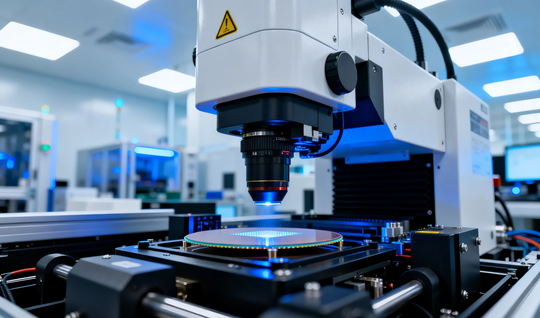
It is understood that in 2025, on the basis of summarizing local practices, SAMR extended the “one-stop” services to the new generation of information technology industry, issued special technical guidelines, and organized experts to conduct research, guidance and assistance for industries such as 5G, big data and artificial intelligence. It provided precise services such as metrological testing, standard development, and inspection and testing certification for various big data centers and computing power centers, helping the efficient operation of new digital infrastructure. Wang Lei, technical director of Guizhou Shujubao, noted that the services helped his company establish a full-life-cycle quality control system, solving the problem of vague data ownership certification.
SAMR will accelerate the construction of a public service platform for quality infrastructure, promoting the upgrading of quality infrastructure services from “one-stop” to “integrated”. The extensive application of “one-stop” services has not only alleviated the technical difficulties of enterprises but also injected strong impetus into the high-quality development of China’s economy, demonstrating the country’s efforts to optimize the business environment and support enterprise development.
热门内容推荐