China’s Offshore Wind Power Gains Global Lead with New Project Commissioning
Off the western coast of Dongfang City, Hainan Province, the first units of the Hainan Qiyuan Offshore Wind Farm, developed by Longyuan Power of China Energy Group, were connected to the grid on April 5, as giant wind turbines with a hub height of 139.4 meters and a single blade length of 118 meters began rotating slowly, according to Xinhua News Agency.
The project, which plans to install 22 10-megawatt (MW) and 20 14-MW wind turbines, is expected to deliver over 1.5 billion kilowatt-hours (kWh) of clean electricity annually upon full commissioning—equivalent to reducing standard coal consumption by 467,000 tonnes and carbon dioxide emissions by 1.271 million tonnes each year, reported China Economic Net.
“This is the first batch application of 14-MW units in Hainan,” said Li Hao, Deputy General Manager of China Energy Group Longyuan Power Hainan Company. “We have innovatively adopted technologies such as trenchless directional drilling and used drones for detection operations to effectively protect the seabed ecology.”
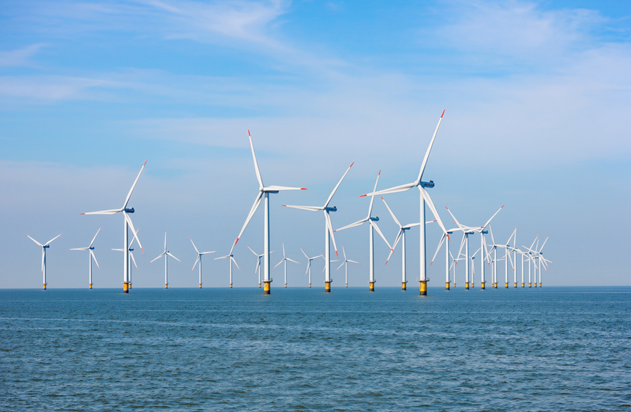
China’s offshore wind power industry is forging new competitive advantages globally, with breakthroughs in large-capacity units and localized technologies. A 20-MW offshore wind turbine has been successfully hoisted, setting a world record for the largest single-unit capacity of any turbine installed in an actual marine environment. The world’s first 16-MW floating offshore wind turbine, with an impeller diameter of 252 meters, has also completed integrated assembly, marking China’s entry into the pilot demonstration stage of floating offshore wind power.
In terms of scale, data released by the National Energy Administration shows that by the end of February this year, China’s total installed wind power capacity had reached 650 million kW, a year-on-year increase of 22.8%. The cumulative grid-connected installed offshore wind power capacity exceeded 47 million kW, ranking first in the world for five consecutive years, noted CCTV News.
Technological advancement is also evident in the Huadian Yangjiang Sanshandao Phase VI Offshore Wind Farm, more than 80 kilometers off the coast. “This is the first large-scale project in China to apply 16.2-MW offshore wind turbines,” said Li Xiang, Secretary of the Party Committee and Chairman of Huadian Yangjiang Company. “With intelligent perception and judgment technologies, the units can increase the wind farm’s revenue by 5% to 10%.”
Coastal regions have accelerated industrial chain layout, forming key offshore wind power bases covering wind turbine manufacturing, supporting equipment, construction and operation. Yancheng in Jiangsu Province accounts for about 40% of China’s total offshore wind turbine production capacity and 20% of blade capacity. Shantou in Guangdong Province is exploring diversified utilization models such as “offshore wind power + hydrogen, ammonia and alcohol production” to become a world-class high-end offshore wind power equipment cluster.
Efficient grid connection is crucial to maximizing the value of offshore wind power. On March 31, a key node was achieved in the Yangjiang Sanshandao Offshore Wind Power Flexible DC Transmission Project, as an offshore converter station jacket weighing over 10,000 tonnes was successfully transferred from land to a transport vessel. Once completed, the project will deliver about 6 billion kWh of clean electricity to the Guangdong-Hong Kong-Macao Greater Bay Area annually.
With breakthroughs in localized technologies and improved economic efficiency, China’s cumulative installed offshore wind power capacity already accounts for more than half of the world’s total. A relevant person in charge of the New Energy and Renewable Energy Department of the National Energy Administration stated that policy support for deep-sea offshore wind power will be strengthened to promote the orderly construction of the industry, with a focus on initiating a number of deep-sea projects.
热门内容推荐