China’s Property Market Enjoys "Spring Warmth" with Structured Recovery
As March and April arrive, China’s traditional property market "spring warmth" has come as scheduled. Reporters visited cities including Beijing, Jinan, Qingdao and Chengdu and found that with continuous policy support, low mortgage interest rates and affordable pricing of improvement-oriented properties, many cities have witnessed the release of pent-up housing demand.
On March 29, Beijing Guoxianfu PARK launched its first sale. With nearly 5,000 pre-registered customers, the project sold 467 units on the opening day. Boasting low plot ratio, high space utilization rate, and comprehensive advantages in transportation and ecology, it has become a top choice for many buyers in Beijing’s "spring warm" property market with its product strength as "quality housing".
In Chengdu, Sichuan Province, Yuexiu·Tianyue Yuncui Ⅲ, which opened at the end of March, achieved a hot sale with 138 subscriptions and a subscription amount of about 550 million yuan, quickly becoming a popular project in the main urban area. In Jinan, Shandong Province, the Link City Tanyue project also saw a sharp increase in signed orders.
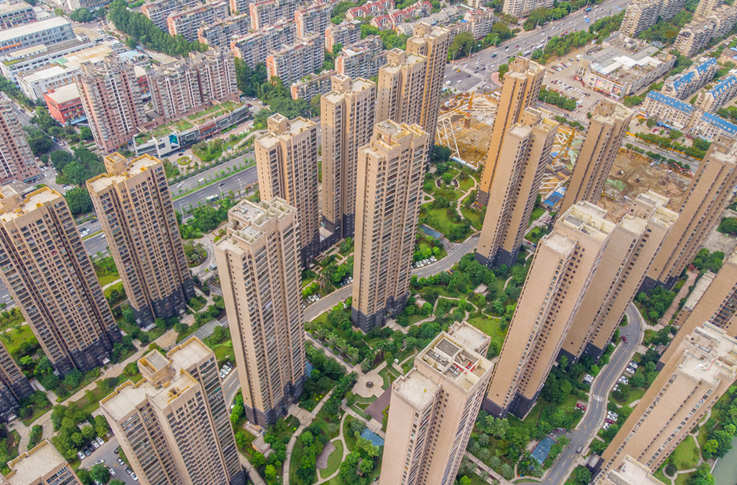
On April 1, some buyers visited the Link City Tanyue project in Jinan during workdays to avoid peak hours. "This community is a school district house, and its ‘quiet house’ design and positioning are very in line with the living needs of ‘the elderly and children’," said a citizen visiting the house. Zhou Fen, a real estate consultant at Link City Tanyue, introduced: "The houses adopt a three-dimensional sound insulation plan, with 16-millimeter sound insulation mats under floor tiles, sound insulation treatment for air conditioning outlets, and the wall thickness between each household increased from 20 cm to 25 cm, which can greatly improve sound insulation effect." She added that all units above the 5th floor of Building 5, which opened in early March, were sold out.
Not only the new housing market, but also the second-hand housing market has ushered in its "spring". Data from Centaline Property shows that 19,886 second-hand residential units were net signed in Beijing in March, a 15-month high and approaching the 20,000-unit mark again after a year. According to Shanghai Lianjia Research Institute, the transaction volume of second-hand residential units in Shanghai reached 31,000 in March, a sharp increase of 37% compared with January this year.
Data from Shenzhen Ke Holdings Research Institute shows that a total of 11,851 new and second-hand housing units were traded in Shenzhen in March, including 5,081 new housing units (a month-on-month increase of 109%) and 6,770 second-hand housing units (a month-on-month increase of 124%), indicating a significant recovery in market activity. In Chengdu, the real estate market achieved a steady "good start" in the first quarter of 2026. Since March, market activity has continued to climb, with new housing transactions rising 62.3% month-on-month and second-hand housing transactions rising 94.4% month-on-month.
Sun Peng, manager of Qingdao Lianjia Store, told reporters that the transaction rhythm of Qingdao’s housing market has accelerated significantly since March. "The customer reception volume and order volume of our store in the first half of March increased significantly year-on-year. Our area has many second-hand new housing communities with relatively mature supporting facilities. Last weekend, it was normal for brokers to walk more than 20,000 steps a day when taking customers to view houses."
Leng Hui, analyst at Beijing Lianjia Research Institute, said the strong market performance in March was due to seasonal factors and policy support. "Every year after the Spring Festival is a golden period for rapid market recovery, known as ‘spring warmth’," she said. "In addition, various policy optimization measures introduced in late December last year, such as relaxing purchase restrictions, optimizing second-home loan conditions and reducing value-added tax rates, have effectively boosted market confidence and stimulated some housing demand, which has been gradually converted into actual transactions in March."
However, industry insiders pointed out that the current market recovery still shows obvious structural characteristics and has not yet achieved a nationwide stabilization. Zhang Bo, president of 58 Anjuke Research Institute, said this year’s "spring warmth" is structurally oriented, with the second-hand housing market outperforming the new housing market instead of a general price increase. "From 58 Anjuke’s online data, the property market shows significant differentiation among first-tier, second-tier and third-and fourth-tier cities. Second-hand housing in first-tier cities has taken the lead in stabilizing, with owners’ quotes becoming firmer and the bargaining space narrowing significantly," he said, citing Shanghai as an example where the bargaining space for second-hand housing has narrowed from 5%-8% to 2%-3%, with even slight price increases in core areas.
Zheng Juntong, senior analyst at China Index Academy, said policies for the property market across China will be more refined in 2026, promoting "controlling increments, reducing inventory and optimizing supply" based on local conditions, accelerating the construction of "quality housing" to stimulate the release of improvement-oriented demand. "The continuity of market recovery in April is particularly crucial. If the popularity in core cities can be sustained, it will help further improve market expectations and lay the foundation for the stable operation of the market throughout the year," Zheng said.
热门内容推荐