China to Roll Out Cross-Customs Return for Cross-Border E-Commerce Exports
BEIJING, March 14 (Reporter) — China’s General Administration of Customs (GAC) has recently issued an announcement, declaring that the cross-customs return model for cross-border e-commerce retail export goods will be promoted nationwide starting from April 1, 2026, aiming to further boost cross-border e-commerce exports, according to a report from Securities Daily.
The cross-customs return for cross-border e-commerce retail export goods (customs supervision code: 9610) refers to a supervision model where, when goods retailed and exported by cross-border e-commerce enterprises are returned overseas, they no longer need to be sent back to the original exporting customs. Instead, enterprises can flexibly choose any customs port across the country to handle the re-import formalities.
Prior to this, the GAC clearly launched a pilot program of the cross-customs return supervision model in 20 direct customs offices, including Beijing, Tianjin, Dalian, Harbin, Shanghai, Nanjing, Hangzhou, Ningbo, Guangzhou, Shenzhen and Chengdu, through the Announcement on Further Promoting the Development of Cross-Border E-Commerce Exports released in 2024. After more than a year of pilot operation, the model is now ready for nationwide promotion.
In line with the requirements of the newly issued announcement, the cross-customs return only applies to cross-border e-commerce retail export goods, namely the "9610 model". Meanwhile, returned cross-border e-commerce retail export goods can be sent back across customs areas, but they are only allowed to be returned to customs supervision operation sites or venues engaged in cross-border e-commerce retail export business.
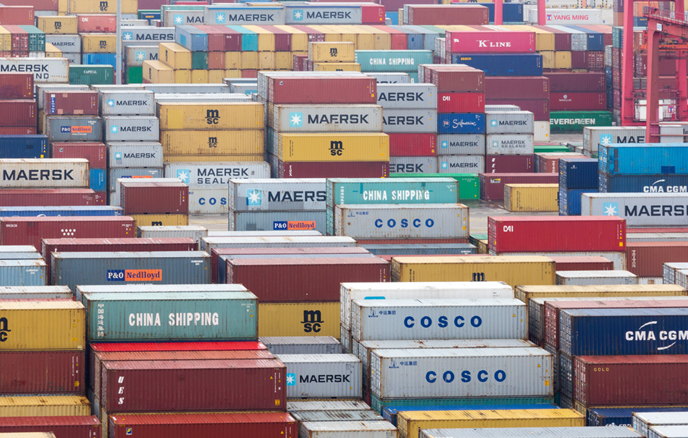
As a new form of international trade, cross-border e-commerce has developed rapidly in recent years and has become an important engine driving China’s foreign trade growth. However, alongside its fast development, cross-border return has long been a major pain point plaguing the industry.
Song Xiangqing, Vice President of the China Commercial Economics Society, told a reporter from Securities Daily that for enterprises, the cross-customs return model breaks the restriction of "returning to the original exporting customs". Enterprises can independently choose any customs port in the country to handle return formalities, which greatly reduces reverse logistics costs, shortens the return cycle, revitalizes overseas inventory, accelerates capital turnover, solves the long-standing industry pain points of "difficulty, high cost and long cycle in returns", and significantly improves operational efficiency and international competitiveness.
"For consumers, the simplified after-sales return channel shortens the waiting cycle and helps enhance the sense of consumption security and satisfaction in overseas online shopping," said Chen Jianwei, Professor at the National Institute of Openness and Development of the University of International Business and Economics, in an interview with Securities Daily. "By removing the bottleneck in the reverse logistics of the ‘last mile’ of cross-border exports, this policy has achieved structural optimization of costs and experiences for both supply and demand sides."
Notably, in February this year, the Ministry of Finance, the General Administration of Customs and the State Taxation Administration jointly issued the Announcement on Preferential Tax Policies for Returned Cross-Border E-Commerce Export Goods. It clearly states that cross-border e-commerce export goods (excluding food) returned in their original state within six months due to overstock or return between January 1, 2026 and December 31, 2027 will be exempted from import tariffs, import value-added tax and consumption tax, and the collected export tariffs can be refunded.
Combined with the newly introduced measure of promoting cross-customs return for cross-border e-commerce retail export goods nationwide, these policies form a synergistic effect to jointly reduce costs and increase efficiency for cross-border e-commerce enterprises. Chen Jianwei noted that the combined force of multiple policies not only directly reduces the financial burden on enterprises, but also reconstructs the risk compensation mechanism of cross-border e-commerce in depth. The preferential tax policy for exported returned goods can effectively offset the additional taxes caused by returns and exchanges, allowing enterprises to dare to expand their SKUs (Stock Keeping Units) to seize the market and strengthen the credibility of Chinese cross-border brands in international competition.
热门内容推荐