Guangzhou New Airport Breaks Ground to Boost Guangdong-Hong Kong-Macao Greater Bay Area Development
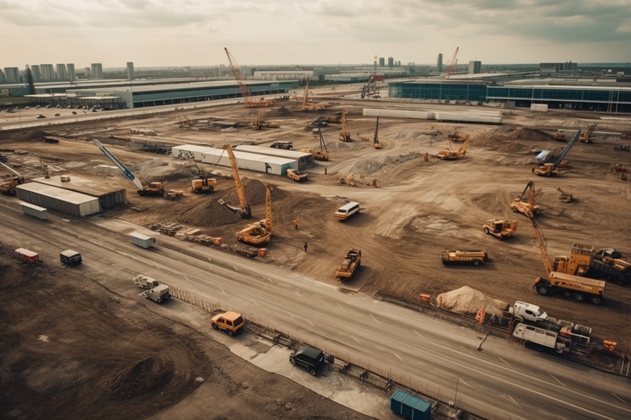
On March 25, construction of Guangzhou New Airport officially kicked off, according to information from the Ministry of Transport. This modern international aviation hub, serving the west bank of the Pearl River, radiating the western part of Guangdong Province and empowering the high-quality development of the Guangdong-Hong Kong-Macao Greater Bay Area, has officially moved from blueprint to construction phase.
Located in Genghe Town, Gaoming District, Foshan City, Guangdong Province, the airport’s current project has a total investment of 41.8 billion yuan, of which 35.9 billion yuan is earmarked for airport engineering. It will include two long-distance parallel runways, a terminal building with a construction area of about 260,000 square meters, 94 aircraft parking bays and corresponding supporting facilities.
The airport is designed to handle an annual passenger throughput of 30 million, a cargo and mail throughput of 500,000 tons and 260,000 aircraft movements, with operation scheduled to start during the "15th Five-Year Plan" period.
As a key landmark project of the world-class airport cluster in the Guangdong-Hong Kong-Macao Greater Bay Area, Guangzhou New Airport is situated at the geographical center of four cities: Foshan, Zhaoqing, Jiangmen and Yunfu, directly serving more than 20 million people.
To achieve seamless connection between air and other transportation modes, the airport will introduce several regional trunk rail transit lines, including the Guangzhou-Zhanjiang High-Speed Railway, Shenzhen-Nanning High-Speed Railway and Zhuhai-Zhaoqing High-Speed Railway.
It will also build a "five horizontal and four vertical" expressway network and rapid road network simultaneously, allowing passengers to complete check-in and luggage drop-off on the same floor of the transportation center and transfer conveniently to other rail transit or ground transportation.
The project plays a vital role in improving regional air service capacity and coverage, as well as optimizing the comprehensive transportation system in the western part of the Greater Bay Area. It is not only an incremental project to meet future air transport demand, but also a key project to optimize regional resource allocation and promote coordinated development.
Upon completion, the airport will arrange routes in a differentiated manner based on its functional positioning, and work together with Guangzhou Baiyun International Airport to help Guangzhou’s international aviation hub upgrade its level, further facilitating the integrated development of the world-class airport cluster and urban agglomeration in the Guangdong-Hong Kong-Macao Greater Bay Area.
热门内容推荐