China’s “Desert, Gobi and Barren Land” Areas Transform into Clean Energy Hubs
Along the edge of the Kubuqi Desert, rows of solar panels stretch to the horizon under the sun, while giant wind turbines rotate slowly, converting wind energy into electricity. Once dominated by sandy and Gobi landscapes, this region has now become an integral part of a large-scale new energy base, according to local staff.
In 2025, China accelerated the green and low-carbon transformation of key industries, with the first batch of “desert, Gobi and barren land” new energy base projects basically completed and put into operation. The installed capacity of new energy storage exceeded 130 million kilowatts, and the proportion of non-fossil energy consumption reached 21.7%, indicating that the country’s renewable energy development is stepping up its pace.
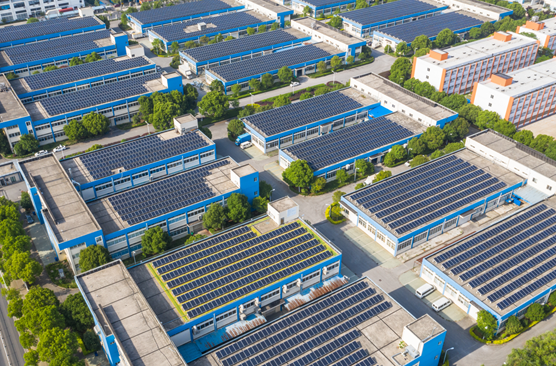
Data from the National Energy Administration shows that by the end of December 2025, the country’s installed photovoltaic power generation capacity had reached 1.2 billion kilowatts, a year-on-year increase of 35%. China’s installed wind power capacity has remained the world’s largest for 15 consecutive years, and one out of every three kilowatt-hours of electricity consumed by the whole society is green power.
Energy green and low-carbon transformation is a long-term process, an academic noted. He emphasized the need to adhere to a systematic concept, balance development and security, and steadily promote the transformation and upgrading on the premise of ensuring energy security.
Relying on abundant wind and solar resources, northwest China is accelerating the construction of large-scale new energy bases. As the installed scale of new energy continues to expand, these bases are becoming an important pillar for China’s energy transformation. Against the backdrop of the “dual carbon” goals and energy structure adjustment, the “desert, Gobi and barren land” new energy bases not only provide strong support for green power supply, but also open up new space for China’s high-quality energy development.
In Jiuquan, Gansu Province, the construction of large-scale wind and solar new energy bases is advancing steadily. In recent years, local authorities have accelerated the coordinated layout of wind power, photovoltaic power and energy storage, exploring the “wind-solar-storage integration” development model. Once completed, the base will transmit electricity to central and eastern regions through ultra-high voltage channels, while supporting the construction of energy storage systems to mitigate fluctuations in new energy power generation and promote the optimal allocation of clean energy on a larger scale.
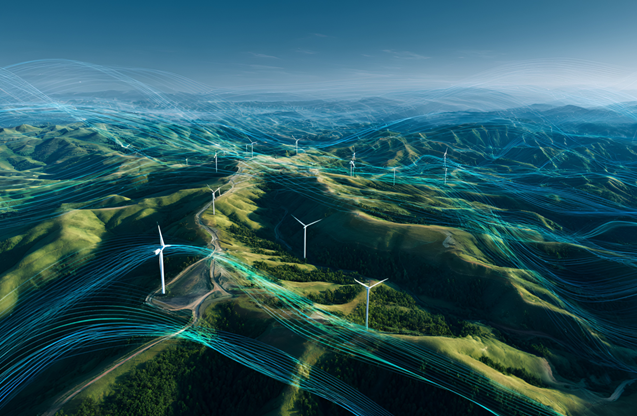
In recent years, “desert, Gobi and barren land” areas in Gansu, Inner Mongolia, Xinjiang and Qinghai have gradually transformed from “wind-sand lands” into “energy highlands”. From grasslands dotted with wind turbines to deserts covered with photovoltaic panels, a number of new energy projects have been put into operation, turning once sparsely populated areas into important spaces for China’s energy transformation.
In Hami, Xinjiang, wind power and photovoltaic power are coordinately arranged to form a multi-energy complementary energy structure. In Haixi Prefecture, Qinghai, large-scale photovoltaic power stations and energy storage projects are deployed simultaneously to improve the absorption capacity of new energy. In Alxa, Inner Mongolia, some new energy bases are exploring the “photovoltaic + desert control” model, using photovoltaic panel piles to fix sand and restore vegetation under the panels, promoting the synchronous development of new energy development and ecological governance.
The academic added that deepening multi-energy complementarity and system integration, and promoting the coordinated and integrated development of various energy sources, are effective practices to balance transformation and security. Implementing models such as “wind-solar-hydro-thermal-storage integration” and multi-energy development of “desert, Gobi and barren land” new energy bases at the base level, through the simultaneous operation of various energy sources and energy storage technologies, is conducive to ensuring the continuous and stable supply of energy.
Improving market mechanisms and strengthening overall scheduling are important guarantees for energy transformation, he suggested. While using market-oriented methods to reduce the total consumption of fossil energy, it is necessary to maintain stable supply capacity. At the same time, improve the electricity spot market, auxiliary service market, capacity pricing mechanism and green certificate trading, guide the optimal allocation of resources through price signals, and ease the cost of energy transformation. Strengthen overall scheduling, strengthen demand-side management in extreme cases, give priority to ensuring people’s livelihood energy use, and consolidate the bottom line of energy supply guarantee.
热门内容推荐