Fabric Innovation Drives Resilient Growth of China’s Textile and Apparel Industry
While China’s textile and apparel industry is under overall pressure, a resilient growth path centered on quality upgrading and fabric innovation has become increasingly clear. Customs data shows that the export volume of textiles reached 142.58 billion US dollars in 2025, a year-on-year increase of 0.5% — a performance underpinned by the industry’s profound transformation from "scale manufacturing" to "value creation", with fabric innovation emerging as the core driver of industrial upgrading.
The core logic of the industry’s development has quietly shifted. Consumer demand for comfort, functionality and environmental friendliness of garment fabrics has surged, and the proportion of high-end fabrics has continued to rise. Those who can accurately grasp fabric trends and connect industrial resources will seize the initiative in development.
As the spotlight is set to shine again on the catwalk of the fashion week, a profound transformation about the future direction of the garment industry is accelerating behind the scenes. Recently, JD Fashion announced in-depth cooperation with China International Fashion Week and China Fashion Association, becoming the official project partner and co-organizer of the 2026 China International Fashion Week (Spring). It will co-host the themed show "JD Day | JD FASHION Quality Fashion" on March 21, bringing together 15 brands including Zhizhi, Kaikai and Pelliot to take the stage with "five super fabrics" and launch a simultaneous "see-now-buy-now" live broadcast session.
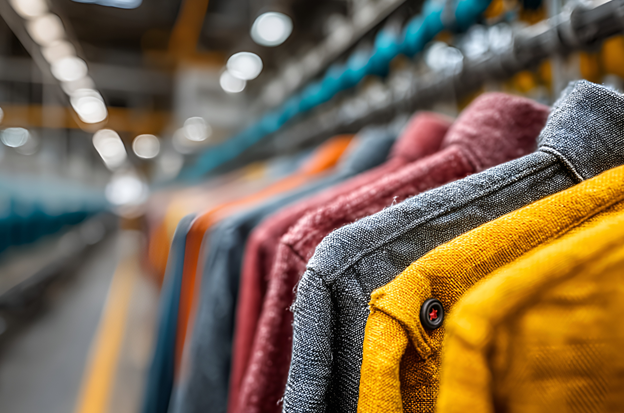
With "quality" as its core, the fashion week show is divided into four chapters — "Simplicity", "Streamer", "Boundlessness" and "Vientiane", which precisely align with every pulse of the industry’s transformation. Firstly, there is the return of the value of natural materials. The "Simplicity" chapter, focusing on natural fibers such as cotton and linen, reflects the market’s renewed emphasis on sustainable wearing concepts.
Secondly, there is the upgrading of fabric with technological functions. The "Boundlessness" chapter, featuring functional technologies such as ultra-high multiple sun protection, waterproof and windproof capabilities, marks the evolution of functional fabrics from "single function superposition" to "systematic solutions". The rise of emerging fields such as outdoor economy, pet economy and health care economy has clarified the direction for fiber innovation, and more and more brands have begun to integrate professional protective technologies into clothing, demonstrating the pioneering proposition of "quality as the core and fashion as the form".
Finally, quality materials have become core competitiveness. Most notably, "Vientiane", the self-operated R&D series launched in this show, includes innovative achievements such as traceable cotton, polylactic acid environmental protection materials and intelligent sweat-hidden technology. This confirms the industry’s in-depth transformation: recycled fabrics have gradually become a real "core competitiveness".
The involvement of e-commerce in the fashion circle at this time is not a cross-border gimmick, but a natural move based on supply chain advantages. In the past, JD mainly played the role of a "seller", converting traffic into sales. With the fading of traffic dividends, competition has upgraded to the ability to transform the supply side. On this occasion, JD Fashion will also join hands with VOGUE BUSINESS to jointly release a fabric trend report, marking a qualitative change in its industry positioning: from a promoter of quality fashion to a definer of industry trends.
热门内容推荐