High-Level Sci-Tech Innovation Platforms Emerge as Core Drivers for China’s Technological Breakthroughs
This year’s government work report proposes to coordinate the construction of national strategic sci-tech forces, deepen the reform of scientific research institutes, strengthen the overall deployment of national laboratories, major sci-tech tasks and major sci-tech infrastructure, and fully enhance the independent guarantee of sci-tech infrastructure conditions.
"This aims to build a hierarchical and functionally complementary matrix of national strategic sci-tech forces. High-level sci-tech innovation platforms are not only R&D carriers, but also core hubs for organizing major research and achieving strategic breakthroughs," noted a deputy to the National People’s Congress during the National Two Sessions, echoing the thoughts of many deputies and members on the construction of sci-tech innovation platforms.
A deputy submitted a proposal to optimize the layout of high-level sci-tech innovation platforms oriented by industrial chains, which stems from long-term research and scientific practice. When aligning with the fundamental requirement of "in-depth integration of innovation chains and industrial chains" for nurturing new quality productive forces, it was found that the traditional sci-tech innovation platform system faces structural challenges.
While traditional sci-tech innovation platforms have laid an important foundation for China’s sci-tech progress, their development tends to be "point-like" in layout, with problems such as scattered resources, diverse goals and insufficient connection with industries. Some platforms even have redundant construction and homogeneous competition, leading to obstacles in achievement transformation, inadequate coupling with regional industries and an evaluation system that still leans towards "valuing papers over transformation" to a certain extent.
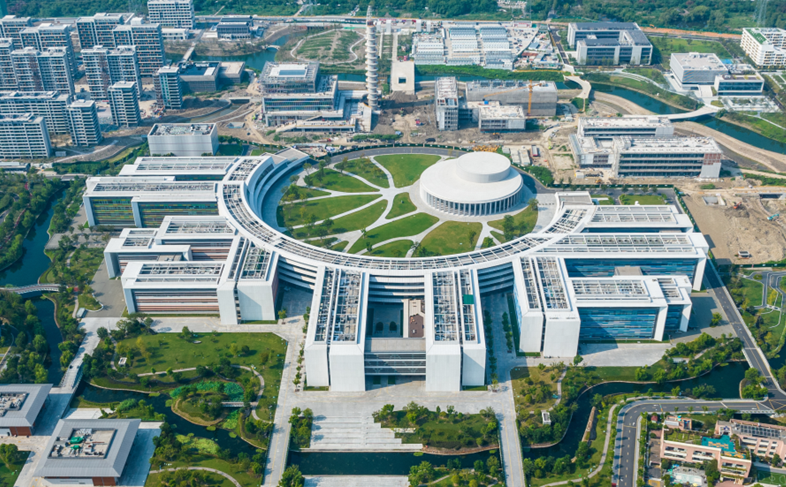
Against this background, the demand for building high-level sci-tech innovation platforms has become increasingly urgent. As an important part of national strategic sci-tech forces, high-level sci-tech innovation platforms integrate various innovation elements from government, industry, academia and research, boasting advantages of interdisciplinary cooperation, talent concentration and institutionalized organization of major sci-tech tasks. They shoulder the strategic mission of solving "bottleneck" problems assigned by the state and provide strong impetus for building sci-tech innovation hubs.
Practices across various regions have offered answers to how to build and make good use of high-level sci-tech innovation platforms. Zhejiang has laid out the development of the new materials industry, built high-level sci-tech innovation platforms such as Yongjiang Laboratory, and strived to create a highland for new materials sci-tech innovation. Fujian has gathered top talents through building "special zone-style large platforms" such as provincial innovation laboratories, achieving a series of core technological breakthroughs and market transformation results in energy storage, hydrogen energy and bio-breeding. Jiangsu has strengthened the construction of high-level sci-tech innovation platforms for solid-state batteries, supporting the joint establishment of technological innovation centers and key laboratories.
To build a first-class innovation ecosystem, suggestions have been put forward, including continuously exploring a dual-appointment mechanism between sci-tech platforms and leading enterprises, and establishing an evaluation system centered on industrial contribution. A vivid case of high-level platforms playing a role is the joint R&D center built by an enterprise and Suzhou Laboratory, forming a closed loop of "enterprises putting forward questions, research institutions answering them and the market evaluating them", realizing the direct transformation of innovation from the laboratory to the production line.
Looking ahead to the 15th Five-Year Plan period, further efforts are needed to fully release the effectiveness of high-level platforms. Proposals include establishing a "four-dimensional coordination mechanism" covering cross-regional project recruitment, national sharing of large scientific installations, barrier-free talent flow and clear benefit distribution, as well as launching a special program for "national industrial chain innovation empowerment platforms" to build a new construction and operation model.
热门内容推荐