China Prioritises Strong Domestic Market as Strategic Pillar for Modernisation
A strong domestic market serves as a strategic pillar for Chinese-style modernisation. As 2026 marks the first year of the 15th Five-Year Plan, the Government Work Report submitted for deliberation has placed "striving to build a strong domestic market" at the top of this year’s key tasks, proposing to adhere to domestic demand-led growth, coordinate consumption promotion and investment expansion, and expand new space for domestic demand growth.
To build a strong domestic market, efforts are focused on effectively boosting consumption and investment, making domestic demand the main driver and stabiliser of economic growth. A package of targeted policies has been rolled out to address the imbalance between strong supply and weak demand, a prominent feature of current economic operation, with insufficient effective domestic demand, especially consumption demand, as a key shortcoming.
Policy measures include implementing an urban and rural residents’ income increase plan, establishing a 100 billion yuan special fund for fiscal and financial coordination to boost domestic demand, and planning to issue 1.3 trillion yuan of ultra-long special treasury bonds to support the "Two Priorities" construction and "Two News" initiatives. Ultra-long special treasury bonds typically refer to those with a tenor of more than 10 years, playing a crucial role in supporting key projects.
To stimulate consumption, the report emphasizes combining intrinsic motivation with supportive policies to enable consumers to spend, be willing to spend and dare to spend. It highlights the implementation of special initiatives to boost consumption and the urban and rural residents’ income increase plan, with measures to raise the income of low-income groups, increase residents’ property income, and improve salary and social security systems.
To address mounting downward pressure on investment, the report proposes tapping effective investment potential, including arranging 755 billion yuan in central budgetary investment, 80 billion yuan of ultra-long special treasury bonds for the "Two Priorities" construction, 800 billion yuan in new policy-based financial instruments to drive social capital, and 200 billion yuan of ultra-long special treasury bonds to support large-scale equipment renewal. Total government investment this year is expected to exceed 5 trillion yuan, supported by 109 major projects during the 15th Five-Year Plan period.
Macro policies are also optimized to stabilize expectations, with a 4.4 trillion yuan quota for new local government special bonds, 177 billion yuan for industrial and employment support, and measures to stabilize the real estate market, strengthen housing security for newly married couples and first-time parents, and accelerate dilapidated housing renovation.
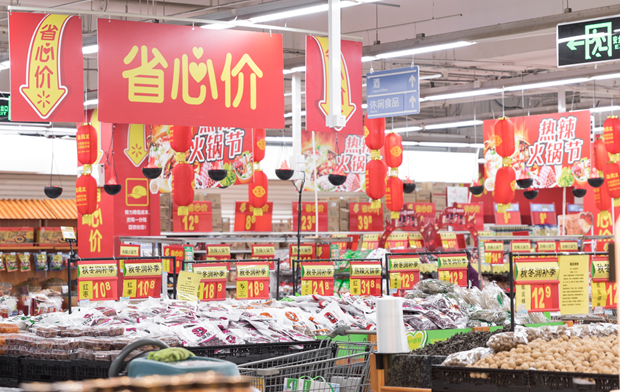
Positive interaction between supply and demand is key to expanding domestic demand space. High-quality supply is being promoted to stimulate potential demand, with 250 billion yuan of ultra-long special treasury bonds earmarked for consumer goods trade-in, and policies to foster new consumption scenarios such as event economy, e-commerce, "AI + consumption" and IP consumption. Support is also given to recycling systems for automobiles, electronic products and home appliances, and the expansion of cultural, sports and tourism consumption.
For investment, measures are taken to boost private investment confidence, including increasing the proportion of government investment in people’s livelihoods, improving the long-term mechanism for private enterprises to participate in major projects, and guiding private capital into high-tech, modern services and other new tracks. Major strategic tasks during the 15th Five-Year Plan period will open up new investment space for all types of market entities.
Deepening reform and opening-up provides strong impetus for domestic demand growth. Measures include removing unreasonable restrictions on consumption, promoting spring and autumn vacations for primary and secondary schools, and implementing paid leave systems. Reforms will focus on building a unified national market, while high-level opening-up will be advanced, with Hainan Free Trade Port exploring institutional opening, introducing high-quality global resources and releasing the potential of China’s super-large market. Such efforts will strengthen the support for a strong domestic market and Chinese-style modernisation.
热门内容推荐