2026 National Consumption Promotion Month Launches, Boosting Consumption with Multiple Measures
According to the Ministry of Commerce on March 3rd, the 2026 National Consumption Promotion Month and Beijing-Tianjin-Hebei Consumption Season kicked off in Tianjin on March 2nd. As a key special activity of "Shop in China", the event will further optimize the implementation of the consumer goods trade-in policy, deepen new consumption formats, models and scenarios, expand the supply of high-quality goods and services, promote first-store economy, health consumption, green consumption and intelligent consumption, and drive the integration of business, tourism, culture, sports and health scenarios to better meet diverse and high-quality consumption needs.
Trade-in Policy Gains Momentum
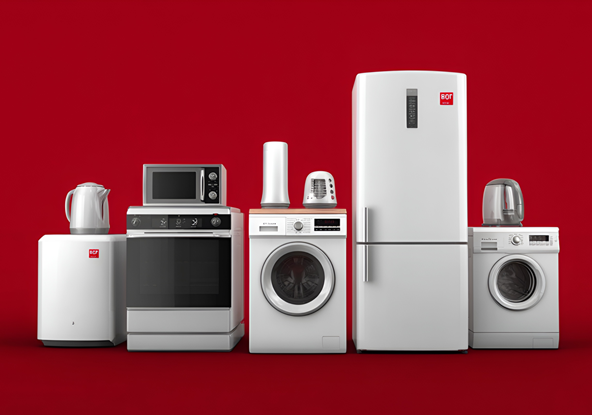
Since the beginning of this year, the consumer goods trade-in policy has been fully implemented and targeted, covering key areas such as automobiles, home appliances, digital and intelligent products. It has effectively activated market consumption potential and driven a sound start of the consumer market.
Data from the Ministry of Commerce shows that as of February 23rd, the 2026 consumer goods trade-in policy has benefited 31.127 million person-times and driven sales of 207.03 billion yuan. Demand for intelligent and green products remains strong; as of February 5th, applications for automobile trade-in subsidies in 2026 reached 335,000, driving new car sales of 53.77 billion yuan.
To further release policy dividends, various regions have introduced supporting measures and refined implementation plans to promote the in-depth implementation of the trade-in policy. On February 14th, Henan Province issued an implementation plan, aiming to complete the scrap and replacement of about 500,000 automobiles and 5 million home appliances for individual consumers by the end of 2026. Starting from February 9th, Beijing implemented a new automobile trade-in subsidy plan with a maximum subsidy of 20,000 yuan. On February 4th, Hubei Province issued detailed rules for automobile trade-in subsidies, stipulating that the provincial Department of Commerce would formulate a monthly plan for subsidy funds, guiding cities and prefectures to refine weekly plans based on local fund scales.
Industry analysis points out that the new round of trade-in policy not only maintains policy continuity but also makes new dynamic adjustments, playing an important role in promoting the 2026 economic work, facilitating positive interaction between consumption and investment, supply and demand, and enhancing the endogenous driving force and reliability of the domestic economic cycle.
Expanding Supply of High-Quality Goods and Services
In addition to optimizing the consumer goods trade-in policy, expanding the supply of high-quality goods and services is also part of the "Shop in China" series of activities, aiming to further meet residents' diverse and high-quality consumption needs.
Industry suggestions on effectively expanding high-quality supply focus on two aspects: on the one hand, seizing the opportunity of policy expansion to optimize the policy implementation process and stabilize and expand traditional consumption; on the other hand, adapting to the trend of residents' consumption shifting from being dominated by commodity consumption to balanced commodity and service consumption, improving the "1+N" policy system for service consumption. Focus will be placed on relaxing market access in fields such as cultural tourism, sports and health, elderly care and child care, and catering and accommodation, encouraging format integration, cultivating leading enterprises with good service quality and high brand reputation, increasing the supply of high-quality services, and stimulating service consumption potential.
On the basis of optimizing supply, innovating consumption scenarios and models is also indispensable, which is an important means to drive consumption and improve consumption experience.
Industry suggestions propose innovating consumption scenarios and models, strongly supporting the first-store economy to attract well-known domestic and foreign brands to open first stores and hold launch events. It is also recommended to deepen pilot projects for new consumption formats, models and scenarios, promote the integration of business, tourism, culture, sports and health formats, such as "traveling with events" and "tasting food through films and television". Meanwhile, leveraging digital empowerment to develop instant retail, digital consumption and Guochao consumption, and building experiential and immersive new consumption landmarks to drive new supply through new scenarios.
Notably, the Beijing-Tianjin-Hebei Consumption Season will last until May, with the three regions launching ten coordinated consumption promotion actions. They will link key business districts, time-honored brands and catering enterprises to carry out more than 140 consumption promotion activities, and release a bilingual "Shop in China · Beijing-Tianjin-Hebei Consumption Guide" covering over 60 key locations, showcasing the consumption characteristics of the three regions.
热门内容推荐