China’s Home Appliance Industry Leads Innovation: Smart and Green Upgrade Meets Consumer Demand
From the traditional “big three” home appliances—television, refrigerator and washing machine—to smart, connected and stylish smart home products, home appliances have become increasingly technologically advanced, feature-rich and innovative, offering consumers more choices for a comfortable and convenient life.
Recently, six departments including the Ministry of Industry and Information Technology jointly issued the “Implementation Plan on Enhancing the Adaptability of Consumer Goods Supply and Demand to Further Promote Consumption” (hereinafter referred to as the “Plan”), which mentions home appliance innovation in many places. How can the home appliance industry strengthen innovation, accurately match supply and demand, and further meet consumer needs?
Smart and Green Trends Gain Momentum
Air conditioners that adjust air supply based on intelligent human body induction, refrigerators that display food freshness with a light touch, and sweeping robots that automatically identify obstacles and plan paths... At Suning.com Max Store in Zhongta, Beijing, reporters saw many consumers experiencing new smart home appliances. AI-enabled home appliances are well-received by consumers, with growing market recognition for interactive products.
Data shows that during this year’s Double 11 shopping spree, smart home appliances accounted for over 55% of sales on Suning.com, with consumers born in the 1990s and 2000s making up more than 40%. Since the start of winter, AI smart heaters have accounted for over 80% of total heating appliance sales, with voice control, remote operation and intelligent temperature control being the three most popular functions among users.
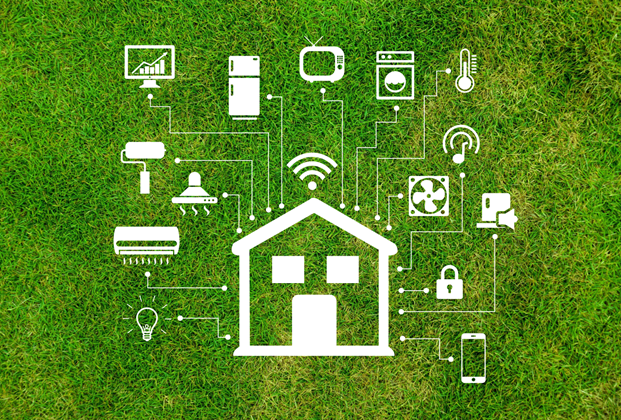
With AI support, range hoods can prevent overflow, ovens can identify ingredients, and washing machines can remind users of tangled clothes, upgrading home appliances from passive execution to active service. AI technology is driving the evolution of home appliances to a higher level, gradually realizing their artificial intelligence.
Industry analysis points out that new technologies such as artificial intelligence have brought consumers a brand-new experience of home appliance functions, including active perception, remote diagnosis, human-computer interaction and even scene linkage. In terms of green transformation, the application of whole-house intelligent energy-saving solutions can realize scientific planning and management of energy from an overall perspective, further improving energy efficiency.
Data from the Ministry of Commerce shows that in the first 11 months of this year, more than 128.44 million home appliances were replaced under the trade-in policy, and the scale of home improvement, kitchen and bathroom “renewal” exceeded 120 million units. Since the implementation of the consumer goods trade-in policy, 90% of consumers have chosen first-class energy efficiency products, fully stimulating their awareness of green and low-carbon consumption. This has also prompted enterprises to attach importance to energy-saving technologies and green design, providing more energy-saving products for the market.
The Plan clearly identifies intelligence and greenization as the core directions for the upgrading of the home appliance industry, promoting the adaptation of supply and demand and the release of consumption potential. Meanwhile, the State Administration for Market Regulation has recently issued a number of national standards for home appliances, clarifying specifications for the application of intelligent and green technologies in terms of intelligent capabilities, scene effects and recycled materials.
The coordinated implementation of the Plan and the new national standards marks that the home appliance industry has entered a new stage of high-quality development led by standards, driven by demand and empowered by technology. In the future, with the implementation and refinement of intelligent and green standards, the industry will shift from “single-product intelligence” to ecological competition featuring “whole-house intelligence + green low carbon”.
Meeting Demand and Enhancing Value
Since the beginning of this year, a “Mickey Mouse”-shaped three-drum washing machine has become a market hit. Equipped with one large and two small drums, it realizes separate washing of large items and small items such as underwear and socks. This is a product developed by home appliance enterprises to accurately insight into and quickly respond to consumer needs. Previously, a netizen posted on a social platform hoping for a washing machine that can wash clothes separately, and the enterprise quickly responded by launching an innovative three-drum integrated washing machine, which received a warm market response.
The successful experience of such products shows that by accurately grasping user needs and pain points, exploring new scenarios and creating new value, traditional home appliance categories still have room for innovation and market growth. Technological innovation of traditional home appliances should be open-minded and demand-oriented, adhering to original technologies to achieve breakthroughs in core technologies, and exploring new functions and experiences around intelligence, personalization, integration and space optimization. Enterprises should insight into and tap the changing needs and scenarios of segmented groups, such as health care, maternal and child care, single-person households and pet owners, and develop innovative products and designs targeted at these groups.
Industry analysis suggests that home appliances should not only meet functional value but also create emotional value. The popular multi-drum separate washing machine not only meets the functional upgrading needs of washing machines from the demand side but also resonates emotionally with consumers. Home appliance enterprises should build relationships with users and involve them in product co-creation. At present, there is still great room for the development of home appliances for specific groups, especially in terms of aging-friendly applications.
Currently, cleaning appliances represented by sweeping robots and floor washers lead the home appliance market in sales. Data from Aoweiyun.com (AVC) shows that from January to October this year, the retail sales of cleaning appliances increased by 16.9% year-on-year, much higher than the overall home appliance market (excluding 3C products). The importance of emerging categories such as cleaning appliances, dishwashers and water purifiers continues to rise.
Industry analysis points out that consumers’ functional demands for home appliances are showing a trend of refinement and rationalization. Their demand for healthy and intelligent products is prominent, and they are willing to pay a premium for new technologies such as sterilization, fresh-keeping and intelligent control. At the same time, research-based consumption demand is increasing, and consumers are more sensitive to information such as core functional parameters, after-sales service guarantees and real user reviews. When purchasing products, they also refer to professional evaluations and offline experiences for comparison.
Against the background of changing consumer demands, home appliance manufacturers have begun to adjust their development logic and marketing strategies, but there is still a mismatch between supply and demand in the consumption link. Industry analysis shows that many manufacturers are engaged in price wars on mid-to-low-end products, with serious product homogenization and insufficient investment in R&D, which is mismatched with consumers’ demand for quality improvement.
The China Household Electrical Appliances Association is actively promoting the high-quality development of the industry. In September this year, it issued the “Initiative on Strengthening Self-Regulation and Fair Competition in the Home Appliance Industry”, proposing to focus on user demand, strictly control product quality standards to achieve high-quality product supply, and comprehensively improve the level of pre-sales consultation, in-sales installation and after-sales maintenance services to provide consumers with high-quality services.
China’s home appliance market has shifted from a period of high-speed growth to a mature period of low-speed growth. Home appliance enterprises need to move beyond the old thinking of “price competition” and turn to “value competition”, upgrading the functions and performance of home appliances to better meet the growing needs of the people for a better life.
Focusing on Innovation to Scale New Heights
According to the goals proposed in the Plan, by 2027, three trillion-level consumption areas and 10 hundred-billion-level consumption hotspots will be formed; by 2030, a high-quality development pattern featuring positive interaction and mutual promotion between supply and consumption will be basically formed.
The Plan proposes to highlight the application of new technologies to foster new drivers of consumption, lay out new areas and tracks including smart homes and consumer electronics, and create 100 iconic products, 100 innovative enterprises and a number of first-application scenario models. It also emphasizes upgrading standards to consolidate supply quality, such as formulating and revising mandatory national standards for smart home interconnection.
Industry suggestions point out that home appliance enterprises should actively respond to the Plan and seize the market space brought by the demand for “stock optimization” and “increment creation”. They should explore models such as the “thousand factories, thousand faces” transformation plan and the full-chain digital system of “user demand - intelligent design - flexible production”, focus on innovation and R&D layout, adapt to the new industry upgrading trends of intelligence, greenization, health and aging-friendliness, do a good job in differentiated competition and build brand influence. Enterprises should also strengthen industry cooperation, attach importance to the leading role of standardization, and promote efficient resource integration and in-depth integration of the industrial chain.
Innovation is the primary driving force for development. The 2025 China Home Appliance Technology Conference proposed that China’s home appliance technology should achieve high-level innovative leadership during the “14th Five-Year Plan” period.
The home appliance industry should strengthen original innovation and tackle key core technologies, actively carry out in-depth cooperation with universities and scientific research institutions to jointly solve technical problems, and promote the in-depth integration of technological innovation and industrial innovation to create new demand with new supply. China’s home appliance industry has been at the forefront of the world, and it is necessary to further strengthen the cultivation and aggregation capacity of high-level scientific and technological talents. In the era of artificial intelligence, enterprises should also establish a training mechanism for compound innovative talents, encourage scientific and technological workers to continuously learn, expand their horizons, and explore new knowledge and skills to inject new vitality into technological innovation.
热门内容推荐