Paramount Skydance Acquires Warner Bros. Discovery for $110bn, Ending Months of Competition with Netflix
US television and film giant Paramount Skydance has officially announced its acquisition of rival Warner Bros. Discovery (WBD), valued at $110 billion (including debt). The move brings to an end months of acquisition competition between the group and Netflix, marking a new phase in the consolidation of Hollywood’s media industry and a major reshaping of the global film and television streaming landscape.
The months-long acquisition battle concluded this week. Earlier this week, Paramount Skydance tabled a new acquisition offer, while Netflix formally withdrew from the competition on Thursday, abandoning further bids for the offer—removing any uncertainty surrounding Paramount Skydance’s acquisition of WBD. Notably, driven by the fierce rivalry between Paramount Skydance and Netflix, WBD has more than tripled in size in less than a year, with its chief executive David Zaslav’s operational strategy gaining market recognition.
The acquisition is no coincidence. Paramount Skydance first submitted an acquisition proposal to WBD last September, with Netflix and other firms subsequently joining the fray, creating a multi-party contest. Upon completion, the newly formed group will integrate superior resources, encompassing two renowned Hollywood film studios—Warner Bros. and Paramount—alongside news channel CNN, streaming services HBO Max and Paramount+, and numerous media network brands including CBS, Discovery Channel, Eurosport, Comedy Central and MTV, establishing a full industrial chain covering film and television production, news dissemination and streaming services.
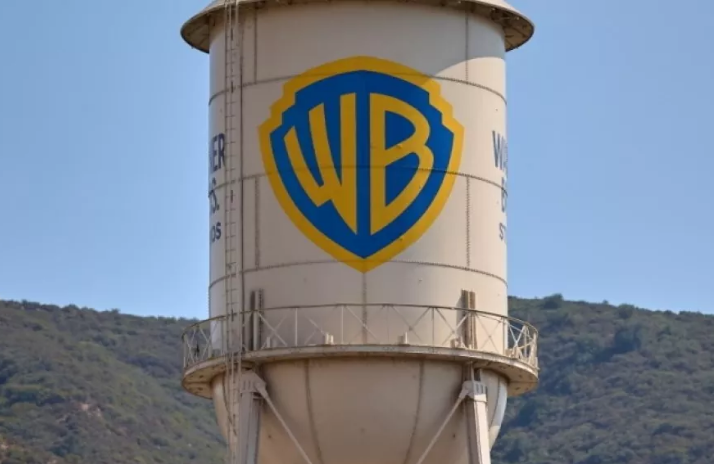
In terms of business positioning, Paramount Skydance and WBD share striking similarities: both face declining viewership for traditional TV channels and have focused heavily on streaming platforms in recent years, seeking to offset weaknesses in traditional operations by expanding streaming influence while producing high-quality content through their in-house studios—an important foundation for the smooth integration of the two parties. Industry insiders noted that the acquisition is a key milestone in Hollywood’s media consolidation, aligning with the declining business model of traditional film studios and the TV industry, and reflecting the inevitable trend of the global media industry towards scale and intensification.
Looking back at Hollywood’s consolidation history, large-scale acquisition cases are not uncommon. In 2019, Disney acquired most assets of Fox Group, incorporating 20th Century Fox Studios; in 2022, Discovery acquired WarnerMedia to form WBD, with David Zaslav as chief executive; the same year, Amazon took control of Metro-Goldwyn-Mayer (MGM), which was significantly smaller in scale than WBD is today. In August 2025, Skydance acquired Paramount Global, laying the groundwork for the current acquisition of WBD.
In terms of content resources, the integration will bring together top-tier film and television IPs. Paramount Pictures will contribute classic and popular films such as Mission: Impossible, Transformers and Top Gun, while Warner Bros. will add the Harry Potter series,The Lord of the Rings series and DC Universe superhero films (including Batman and Superman), giving the merged group a vast content library and further enhancing its market competitiveness.
The integration of streaming services will be a key focus for the new group. As of the end of 2025, HBO Max and Paramount+ had 131.6 million and 78.9 million monthly active users respectively. According to Bloomberg, David Ellison, owner of Paramount Skydance, plans to merge the two streaming platforms to strengthen competitiveness against Disney (Disney+ and Hulu combined valued at $174 million) and Netflix (valued at $3.25 billion) in the global streaming market.
Notably, traditional TV remains an important revenue stream for both companies, but amid the rise of streaming and the shrinkage of US cable TV services, the scale of their traditional TV operations has continued to decline quarterly—an important driver for the merger and their pursuit of transformation.
Currently, the acquisition still requires two key steps: approval by shareholders at a special general meeting on 20 March, and confirmation by relevant regulators, most notably the Federal Communications Commission (FCC), the telecoms regulator. It is understood that in July last year, to secure approval for its acquisition of Paramount Global, Paramount Skydance committed to the FCC that it would adjust CBS’s editorial guidelines as required by the regulator—a special compromise interpreted as a response to criticism of CBS’s remarks, with CBS having been sued by Trump in October 2024.
David Ellison’s long-term vision underpins the acquisition. In less than 15 years, he has grown a start-up named “Stardust Dance” into a sprawling media empire through leveraged operations and bold acquisitions. To acquire WBD—whose market value is nearly five times that of Paramount Skydance—the group will need unique financial arrangements, personal support from his father Larry Ellison (founder of Oracle), and significant borrowing.
On the other hand, Netflix received a positive market response following its withdrawal from the acquisition. Investors welcomed the decision, with the global leading streaming company’s share price rising 13.75% in Friday’s trading—highlighting market recognition of Netflix’s focus on its core business and avoidance of acquisition integration risks. However, there are differing views in the industry, with many arguing that Paramount Skydance’s $110 billion offer is overvalued, potentially leaving the group with significant financial pressure in the future.
Currently, all parties are awaiting the results of the shareholder meeting and regulatory reviews, with the final completion date of the acquisition yet to be confirmed. Industry insiders predict that if the acquisition proceeds smoothly, it will reshape Hollywood’s media landscape and exert a profound impact on global film and television production, streaming competition and traditional media transformation.