Multiple Factors Hinder the Slowdown of Production Increase at Kazakhstan's Tengiz Oilfield
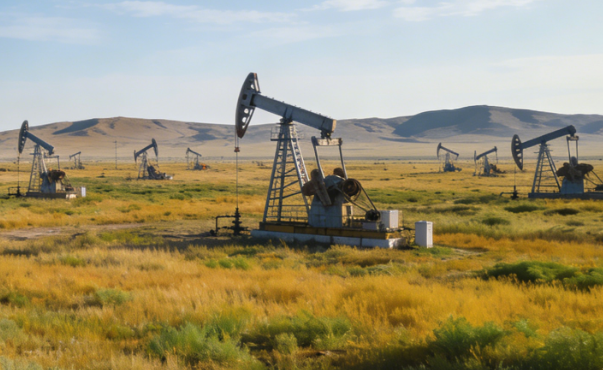
On Wednesday, industry sources told Reuters that severe storms in the Black Sea region and warnings of a possible drone attack on a key oil-loading terminal are continuing to slow down the rate of crude oil production increase at Kazakhstan's giant Tengiz oilfield, making it difficult for the oilfield to meet its scheduled peak production target. As an important crude oil production base in Kazakhstan, the Tengiz oilfield accounts for nearly 40% of the country's total crude oil output, and its production fluctuations have a certain impact on regional energy supply.
It is understood that this large-scale oilfield, with a daily production capacity of 950,000 barrels, was forced to shut down completely last month due to a fire on site that damaged critical power supply. According to a notification from Kazakhstan's Ministry of Energy, the shutdown was caused by a fire in an oilfield transformer on 18 January. Although the fire was extinguished in a timely manner with no casualties, it triggered a failure in the power distribution system, leading to the suspension of production at both the Tengiz oilfield and the surrounding Korolev oilfield. As a result, Kazakhstan's total crude oil output dropped by 32% that month.
After the fire, the consortium led by Chevron quickly launched disposal and restoration work. Currently, the oilfield has resumed production, and its output is gradually recovering. Tengizchevroil, the company responsible for operating the oilfield, is jointly owned by Chevron (50% stake), ExxonMobil (25% stake), Kazakhstan's state-owned oil and gas company KazMunayGas (20% stake), and Russia's Lukoil (5% stake). It has been responsible for the development and operation of the oilfield since 1993.
However, the superposition of multiple external factors has severely hindered the oilfield's production increase process. On the one hand, the Caspian Pipeline Consortium (CPC) Black Sea terminal, which handles most of Kazakhstan's crude oil exports, has recently been hit by severe storms, resulting in a significant slowdown in the operation speed of this core crude oil transportation channel, and even a temporary suspension of loading and crude oil receiving operations.As a key hub connecting the Tengiz oilfield to the international market, the CPC pipeline is approximately 1,511 kilometres long and undertakes more than two-thirds of Kazakhstan's crude oil export transportation tasks. Its operational disruption has directly led to poor crude oil export.
On the other hand, warnings from Ukraine about possible drone attacks on energy infrastructure along Russia's Black Sea coast have led to multiple interruptions in the loading schedule at the CPC terminal. The Tengiz oilfield was forced to suspend production increase because the oil storage tanks were full. It is reported that the CPC terminal had previously been damaged by drone attacks, and the maintenance work on the single-point mooring system has progressed slowly due to severe winter weather, further exacerbating the transportation bottleneck.
Data shows that as of 8 February, the output of the Tengiz oilfield has recovered to 60% of its peak capacity, with a current daily output of approximately 550,000 barrels. Previously, affected by the fire, the oilfield was completely shut down for half a month in January, and its daily output only recovered to 183,000 barrels in early February. Although it has gradually recovered since then, the growth rate has not met expectations.A Reuters source revealed on Wednesday that the oilfield is technically capable of reaching a peak production of 950,000 barrels per day, but its production increase process has been severely hindered.
The source added that delays in loading operations at the relevant terminal of the Chinese oil company near Novorossiysk have led to certain restrictions on the crude oil transportation process of the Chinese oil company. However, such delays are caused by the overall disruption of the regional transportation environment, not a single factor.
Overall, the superposition of multiple factors such as Black Sea storms, drone attack warnings, and blocked transportation channels has prevented the Tengiz oilfield from reaching its peak production as scheduled on 23 February, and the production increase target has not been achieved on time. Currently, Tengizchevroil is working with relevant parties to closely monitor changes in the external environment and promote production recovery and increase. At the same time, the CPC terminal is also actively responding to weather and safety risks, striving to resume normal operational rhythm as soon as possible.