OPEC+ to Restart Production Increase in April to Address Summer Demand and Hedge Geopolitical Risks
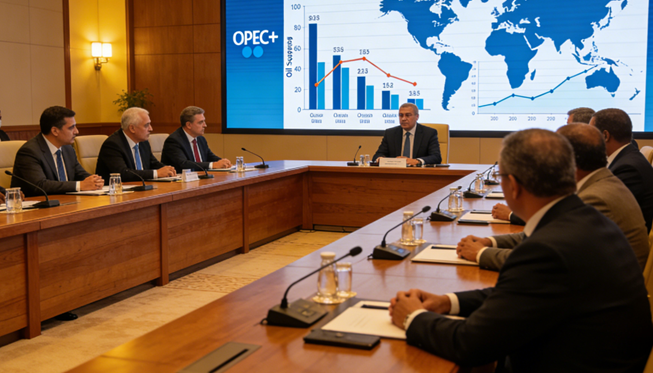
According to a report by Bloomberg on Wednesday, ahead of the meeting of the Organization of the Petroleum Exporting Countries (OPEC) and its allies (collectively referred to as OPEC+) on 1 March, the group is considering restarting its crude oil production increase plan in April 2026, proposing to raise daily output by 137,000 barrels (137,000 bpd). This move marks the official end of OPEC+'s suspension of production increases since the first quarter of 2026, demonstrating its strategic consideration of making early arrangements for the summer energy demand peak and consolidating its market share.
It is understood that OPEC+ had previously completed a production increase of 137,000 barrels per day at the end of 2025, and then suspended the production increase plan in the first quarter of 2026 to avoid the risk of global crude oil oversupply. One of the core objectives of restarting the production increase this time is to help major oil-producing countries such as Saudi Arabia and the United Arab Emirates (UAE) regain market share squeezed by non-OPEC+ countries, while responding to the complex situation in the current global crude oil market. Notably, the meeting on 1 March finally confirmed that eight major OPEC+ member states had decided to adjust the April production increase scale to 206,000 barrels per day, exceeding the previously expected 137,000 barrels, which is a precise regulatory measure of moderate supply supplement[superscript:1][superscript:6].
Current international oil prices have been continuously supported by the ongoing tensions between the United States and Iran, showing a sharp upward trend. Affected by the US-Israeli air strikes on Iran on 28 February, geopolitical risks have escalated sharply, with Brent crude oil prices surging above $71 per barrel, hitting a seven-month high, and even climbing to a high of $82.37 per barrel subsequently[superscript:4][superscript:7]. Despite widespread concerns about global crude oil oversupply in the market, expectations of military operations and potential supply disruption risks triggered by the US-Iran conflict have continued to stir market sentiment and drive oil prices to fluctuate upward.
The escalation of US-Iran tensions has added a risk premium of $3 to $4 per barrel to US crude oil prices. Industry analysts generally warn that if the conflict escalates from verbal confrontation to actual military action, oil prices may see a further sharp rise. Analysts at Barclays Bank point out that if the United States only targets Iran's military or government senior forces without directly attacking its oil facilities, Brent crude oil prices may climb to $80 per barrel; if the attacks are directed at Iran's oil production areas or export terminals, oil prices may break through $100 per barrel[superscript:5].
Rystad Energy has given a differentiated forecast, stating that if the US-Iran conflict lasts for a short period and does not cause major supply disruptions, in the scenario of a widespread but non-catastrophic conflict, oil prices may temporarily rise by $10 to $15 per barrel. It is understood that affected by the conflict, shipping companies have successively taken preventive measures, and oil tanker transportation through the Strait of Hormuz has basically come to a standstill, further exacerbating market concerns about supply disruptions[superscript:5].
JPMorgan Chase released a forecast last year, pointing out that in the "worst-case scenario"—that is, if Iran blocks the Strait of Hormuz, a key global oil waterway—oil prices may soar to $130 per barrel. As the world's most important oil chokepoint, the Strait of Hormuz is the only direct maritime passage connecting the Persian Gulf to the open ocean, carrying 20% to 30% of global seaborne oil transportation every day. Some data show that its average daily throughput has exceeded 14 million barrels, accounting for about one-third of the world's total seaborne crude oil exports. It is crucial for Gulf oil-producing countries such as Saudi Arabia, Iran, and Iraq to export oil to Asia and other regions of the world[superscript:3][superscript:5]. Once traffic through the strait is blocked, the global market may face a supply gap of up to 15 million barrels per day[superscript:3].
Industry analysts believe that OPEC+'s restart of production increase this time is not only an early arrangement for the summer demand peak but also an important measure to hedge geopolitical risks and stabilise the global crude oil market. In its communiqué on 1 March, the group clearly stated that it will continue to closely monitor market conditions, maintain policy flexibility, and adjust the pace of production increases or cuts according to actual circumstances to safeguard the stability of the global crude oil market[superscript:6]. Currently, the market is closely watching the subsequent implementation of OPEC+'s production increase and the development of the US-Iran conflict, both of which will jointly determine the future trend of international oil prices.