Qantas Posts 6.3% Half-Year Turnover Growth, with Stable Net Profit
On Thursday, Qantas Airways officially released its half-year performance report. Data shows that the company’s turnover achieved steady growth and its net profit remained stable. This strong performance is mainly driven by robust market demand for travel and the introduction of more fuel-efficient new aircraft, which have effectively optimised operational costs and enhanced service capabilities.
The report clearly states that during the second quarter of the 2026 financial year (i.e., from July 1 to December 31), Qantas’ turnover increased by 6.3% year-on-year, reaching 12.9 billion Australian dollars (approximately 7.1 billion Swiss francs). Meanwhile, the company’s net profit remained basically stable, edging up by only 0.2% to 925 million Australian dollars (approximately 560 million euros). Notably, despite the growth in revenue, Qantas’ net profit in the first quarter of the 2025/26 adjusted year remained stable, demonstrating strong performance resilience.
Commenting on the performance, Qantas CEO Vanessa Hudson said: “The reasons behind this performance are clear: demand for travel has remained strong, and new equipment has fundamentally changed the way we serve our customers and conduct our business.” She added, “Australians’ passion for travel remains exceptionally high,” and Qantas also expects strong passenger demand to continue in the second half of the next financial year, providing sustained support for the company’s performance.
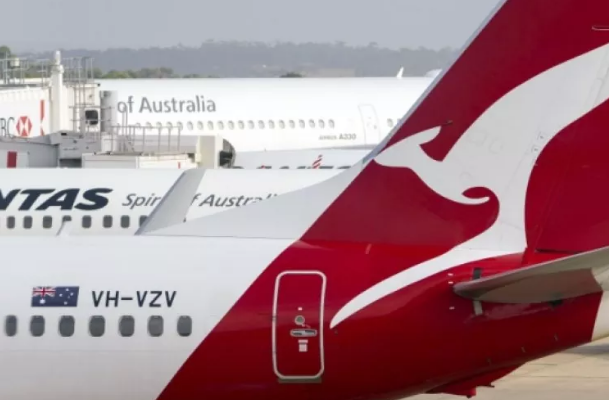
According to Ms. Hudson, Qantas’ low-cost subsidiary Jetstar Airways has become an important driver of performance growth. It not only carries more passengers to various tourist destinations but also has improved operational efficiency thanks to its updated fleet. The updated fleet includes aircraft such as the Airbus A320neo and A321LR, which are more economical in terms of fuel consumption and maintenance costs. These aircraft have not only reduced operational expenses but also created conditions for Jetstar to launch new routes. It is understood that Jetstar has recently launched several new routes, including the international route from Melbourne Avalon Airport to Bali and the domestic route from Melbourne Avalon to Adelaide, further expanding its market reach.
Ms. Hudson further revealed that Qantas expects to take delivery of 30 new aircraft in the second half of this year. The introduction of these new aircraft will further improve fuel efficiency and bring equivalent fuel consumption benefits. It is reported that Qantas has been continuously advancing fleet renewal in recent years. In addition to the Airbus A320neo and A321LR, it also plans to introduce advanced models such as the Airbus A220 and A321XLR. Among them, the A321XLR’s per-seat fuel consumption is about 30% lower than that of the previous generation, and the A220’s fuel efficiency is 25% higher than that of the models it replaces, which can effectively reduce operational costs and carbon emissions.
However, Qantas is also facing certain cost pressures amid performance growth. The company disclosed that there has been a more significant increase in expenditure in recent months, including employee salaries, fuel costs, and various taxes and fees. Ms. Hudson noted: “Over the past 12 months, the increase in airport taxes and other government-imposed fees has been more than twice the inflation rate.” In addition, according to industry data, Qantas expects fuel expenditure to be about 2.5 billion Australian dollars in the second half of the year, higher than the market’s previous estimate of 2.42 billion Australian dollars. The rise in fuel costs will further increase the company’s operational pressure.
Industry analysts believe that Qantas’ half-year performance demonstrates strong market adaptability. Robust travel demand provides core support for turnover growth, while fleet renewal has effectively offset part of the cost pressure, helping to keep net profit stable. Despite challenges such as rising taxes, fees, and fuel costs, with the continuous delivery of new aircraft and the expansion of the route network, Qantas is expected to further consolidate its market position, cope with cost pressures, and seize development opportunities brought by the subsequent growth in passenger demand. Currently, Australia’s economy is expected to grow by 1.5% in the 2025-2026 financial year, and the stable macroeconomic development will also provide a sound environment for Qantas’ subsequent operations.