Russia and Iran Expand Crude Oil Discounts, Vying for China's Independent Refinery Market
In recent weeks, the discount margins on crude oil exports from Russia and Iran have continued to widen. It is understood that due to restricted export channels, sanctioned crude oil from both countries has been piling up in offshore floating storage tanks. As the only buyers in the world that have not ceased purchasing such sanctioned crude oil, China's independent refineries have become the core target of competition between the two countries, further driving the continuous increase in discount margins.
Previously, India's gradual shift away from reliance on Russian crude oil dealt a significant blow to Russia's already limited export market. Against this backdrop, China has become the only "safe" crude oil export market that Russia can rely on, alleviating its export pressure. Meanwhile, China's independent refineries in Shandong Province (commonly known as "teapot" refineries) have also continued to purchase sanctioned Iranian crude oil. This choice stems from the increased market demand for alternative crude oil after the ban on Venezuelan crude oil imports, with large traders designated by the US government responsible for selling such Iranian crude oil.
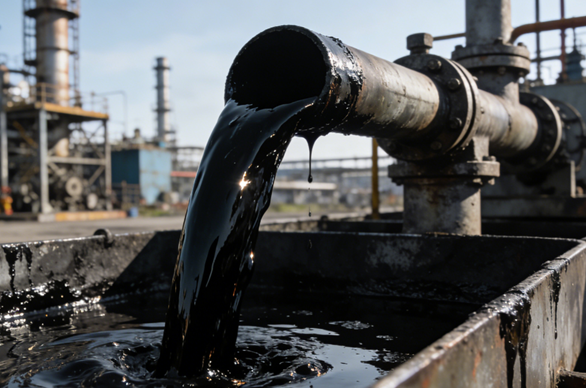
Affected by Western sanctions, the crude oil export channels of both Russia and Iran are strictly restricted, with extremely limited choices of export markets. Therefore, both countries regard the Chinese market as a core breakthrough, vying for orders by continuously increasing discount margins to further optimise their export structure. It is understood that the offshore floating storage volume of crude oil in Russia and Iran has reached a high level, with nearly 48 million barrels of Iranian crude oil stranded in floating storage and nearly 10 million barrels of Russian crude oil waiting for buyers. Inventory pressure has further forced both countries to increase discount margins.
Specifically, the current price of Russia's flagship Urals crude oil is about $12 per barrel lower than Brent crude oil on the Intercontinental Exchange (ICE) in London, compared with a price gap of only $10 per barrel in January this year, indicating a significant expansion in the discount margin. This information was disclosed to Bloomberg by anonymous traders familiar with the transactions. On the Iranian side, the quotation for its Iranian Light crude oil is $11 per barrel lower than Brent crude oil, a notable increase compared with the discount margin of $8 to $9 per barrel in December last year, according to sources from Bloomberg.
Industry analysts point out that Russia and Iran are essentially vying for market share among China's private refineries. At present, China's major state-owned refineries generally avoid Iranian and sanctioned Russian crude oil to avoid risks related to sanctions. After India withdrew from the Russian crude oil spot market, the focus of competition between the two countries has further concentrated on China's independent refineries, which is one of the core reasons for the continuous expansion of discounts by both countries.
From the perspective of the current competitive situation, Russia has temporarily taken the upper hand in this market competition since the beginning of this year. Data shows that as of February 18, the average daily delivery volume of Russian crude oil to Chinese ports reached 2.09 million barrels per day (bpd), a record high, compared with an average daily delivery volume of 1.72 million barrels in January, showing a significant growth momentum. This growth has also effectively offset the export gap caused by India's withdrawal. In contrast, according to data from Kepler cited by Bloomberg, as of the beginning of 2026, Iran's crude oil exports to China decreased by 12% compared with the same period last year.
It is understood that the reason why Russian crude oil has gained the upper hand in the competition is not only the larger discount margin but also its greater advantage in transportation stability — China and Russia have a mature land pipeline transportation system, and can also ship via the Pacific Ocean with relatively fixed routes and more controllable geopolitical risks, which is more in line with the purchasing needs of China's independent refineries. In contrast, Iranian crude oil faces uncertainties in transportation stability due to the situation in the Middle East, which has affected its market competitiveness to a certain extent.
In general, the continuous expansion of crude oil discounts by Russia and Iran is a proactive measure by both countries to cope with export difficulties and compete for the Chinese market, and it also provides China's independent refineries with more cost-effective crude oil options. The purchasing decisions of China's independent refineries are essentially rational choices based on market demand and cost considerations. The competition between Russia and Iran will further affect the global trade pattern of sanctioned crude oil, and the subsequent changes in discount margins and market share are worthy of continuous attention.