Trump Urges AI-Focused IT Companies to Build Their Own Power Generation Facilities to Ease Household Electricity Pressure
According to Reuters, U.S. President Donald Trump publicly urged IT companies eager to accelerate their expansion in the artificial intelligence (AI) field to build their own power generation facilities and independently meet their own electricity needs during his State of the Union address.
This move is intended to prevent ordinary American household consumers from bearing the additional electricity costs brought about by the expansion of the AI industry and effectively protect the rights and interests of household electricity consumption.
"Tonight, I am pleased to announce that I have reached a new Consumer Protection Commitment Agreement. Do you know what this is?
We have made it clear to major technology companies that they are responsible for meeting their own electricity needs," Trump stated explicitly in his State of the Union address, pointing directly to the surging electricity demand caused by the current expansion of the AI industry. He further explained: "Our existing power grid is outdated and dilapidated.
It simply cannot bear the huge amount of data and electricity required. So I told them that they can build their own power plants. They will generate their own electricity. This will ensure that companies can obtain power supply, and at the same time, it will reduce your electricity bills."
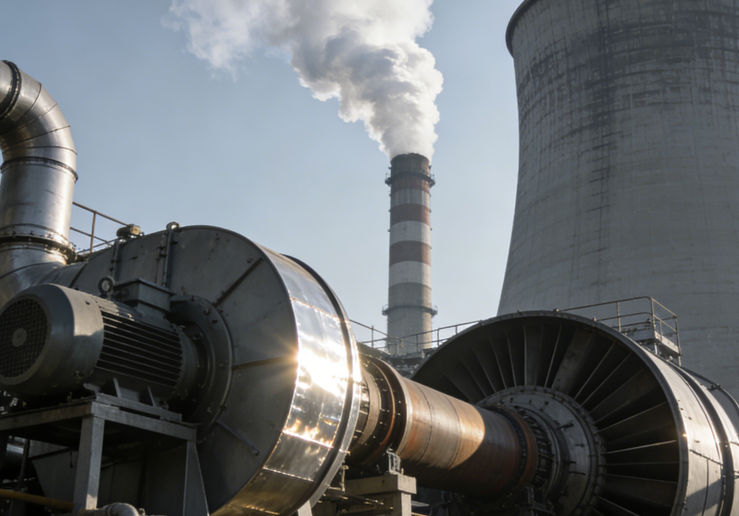
In fact, the idea of allowing large technology companies to independently guarantee their own power supply has been brewing in the U.S. political field for some time. In recent years, with the rapid development of AI technology, large IT companies have built data centers on a large scale, leading to a sharp surge in electricity demand, which in turn has driven the continuous rise of American residential electricity bills and aroused widespread public dissatisfaction.
It is reported that these technology giants are currently seeking to obtain hundreds of gigawatts of electricity supply to connect their data centers to the existing U.S. power grid. However, the power grid infrastructure in key U.S. regions is generally outdated — the average service life of the U.S. power grid has exceeded 30 years, and some equipment has been in service for more than half a century. Moreover, investment in power grid upgrades has failed to keep up with the growing demand for electricity, putting the power grid’s carrying capacity under severe pressure. This situation has forced grid operators to provide a variety of alternative power supply solutions for the so-called "hyperscale enterprises" that plan to connect their proposed data centers to the power grid.
Among the many alternative solutions, "self-developed power generation" (i.e., enterprises build their own power generation facilities and supply power independently) has become the core option, and this solution has now obtained official support from the U.S. federal government. For data center operators, this solution is also superior to another proposed plan: enterprises obtain priority access to the power grid, but must agree to stop power supply or disconnect from the grid during peak electricity consumption periods or when the grid is overloaded, and switch to backup power sources instead.
In contrast, building their own power generation facilities can not only ensure the stability of enterprises’ own power supply, avoid affecting the expansion of AI business due to grid restrictions, but also reduce reliance on the public power grid and ease the pressure on household electricity consumption.
It is reported that this initiative of the Trump administration is not only to address the realistic dilemma of the aging U.S. power grid and the imbalance between power supply and demand, but also to respond to public dissatisfaction with rising electricity bills, while taking into account the sustainable development needs of the AI industry.
At present, several major U.S. technology giants have stated that they will respond to the relevant requirements and plan to take measures to independently guarantee the power supply of their AI data centers. It is expected that next week, enterprise representatives including Amazon, Microsoft, Google, OpenAI, Meta and Oracle will go to the White House to sign relevant written commitments .
Industry insiders pointed out that the expansion of the AI industry is inseparable from stable power support, and the problems of the aging U.S. power grid and lagging investment cannot be completely solved in the short term.
Trump’s urging of technology companies to build their own power generation facilities is a compromise measure that balances industrial development and household well-being.
However, some views hold that although this move can alleviate the pressure on the public power grid and curb the rise of household electricity prices in the short term, the high cost of technology companies building their own power generation facilities may restrict the expansion of small and medium-sized enterprises in the AI field.
In addition, how to balance the construction of power generation facilities and environmental protection requirements still needs further exploration. Some Democratic senators and clean energy organizations also believe that this measure fails to solve the real problem of the outdated U.S. power grid, and fundamental power market reform is needed .