Transneft Pump Station Fault in Russia Causes Crude Oil Transportation Decline; Combined with UK Sanctions, Export Pressure Intensifies
According to Reuters, after a fault occurred at the Kalenikino pumping station in Tatarstan operated by Russia’s pipeline operator Transneft (PJSC Transneft), the company has reduced the crude oil input in its system by approximately 250,000 barrels per day.
This move has further compressed the space for Russia’s crude oil allocation and exports, and the recent UK sanctions against the company have put it under double pressure.
It is reported that the Kalenikino pumping station is an important crude oil blending and distribution hub in Russia, with a daily transportation capacity of about 1 million barrels, undertaking multiple key functions: it not only transports crude oil to the Druzhba oil pipeline network, but also connects export routes to Primorsk on the Baltic Sea and Novorossiysk on the Black Sea.
At the same time, it is responsible for blending different crude oil streams into Urals export-grade crude oil, playing an important supporting role in Russia’s crude oil exports.
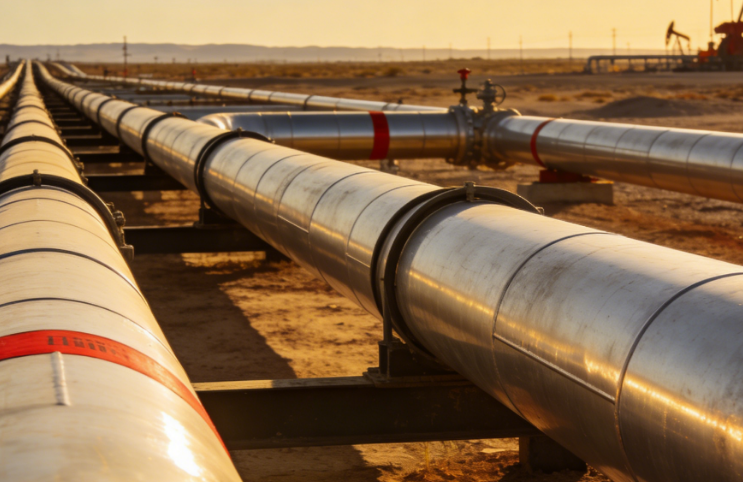
As one of Russia’s most important westward crude oil export routes, the Druzhba oil pipeline system has a daily transportation volume of about 1.4 million barrels on its northern and southern branches. It is worth noting that the oil transportation flow on the southern branch of the pipeline has been interrupted. The additional transportation restrictions caused by the recent fault at the Kalenikino pumping station have further compressed the room for Russia to reallocate crude oil, putting greater challenges to its export layout.
Industry analysts pointed out that a daily reduction of 250,000 barrels in crude oil input does not necessarily lead to a corresponding decline in exports, but this change clearly indicates that Transneft’s oil transportation system has exceeded its normal operating load.
When core hubs like Kalenikino slow down their operation, upstream oil producers have to either reduce crude oil output or store excess crude oil in warehouses, making it difficult to achieve efficient allocation. Sources have revealed that Tatneft’s oil exports are among the most affected by the pumping station fault.
The transportation disruption caused by the Kalenikino pumping station fault occurred on the basis of existing problems along the Druzhba oil pipeline. Since late January this year, the oil transportation flow from the pipeline to Hungary and Slovakia on the southern branch has been suspended, mainly due to previous damage to pipeline infrastructure and disputes over relevant maintenance matters.
Under normal circumstances, this crude oil would be transported westward through the pipeline. If pipeline transportation remains blocked, the crude oil needs to be diverted to ports, but this premise is that there is idle transportation capacity at the ports; otherwise, export efficiency will be further affected.
To make matters worse, the UK officially imposed sanctions on Transneft this week, along with dozens of oil tankers related to Russia’s "shadow fleet". Data shows that Transneft undertakes more than 80% of Russia’s oil export transportation tasks and is the core hub of Russia’s energy exports.
The UK’s sanctions this time have undoubtedly further hindered Russia’s crude oil export channels and intensified its energy export pressure.
It is reported that the UK recently launched nearly 300 new sanctions against Russia, one of the core goals of which is to crack down on Russia’s energy revenues. As a key carrier of Russia’s crude oil exports, Transneft has become a key sanction target. In the same period, 48 oil tankers related to the "shadow fleet" and 175 affiliated enterprises were also sanctioned.
At present, Transneft has not announced the specific cause of the Kalenikino pumping station fault and the repair schedule, nor has it clarified how long the reduction in crude oil input will last.
The market generally pays attention to whether the combination of this fault and Western sanctions will further affect Russia’s crude oil output and the global energy market supply pattern.