UK Steps Up Sanctions Against Russia; EU’s 20th Round of Sanctions Against Russia Stalls
On Tuesday local time, on the occasion of the 4th anniversary of the outbreak of the Ukraine conflict, the UK government announced nearly 300 new sanctions against Russia, focusing on Russia’s energy sector, aiming to further curb Russia’s oil revenues and simultaneously launch a crackdown on dark web networks related to illegal Russian oil trade.
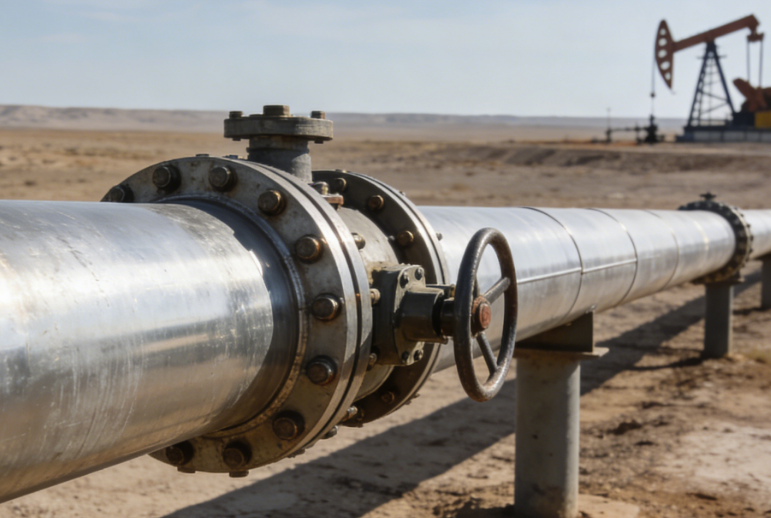
One of the core targets of this round of sanctions is Russia’s oil pipeline giant — PJSC Transneft. It is reported that the company undertakes more than 80% of Russia’s crude oil export transportation tasks. Imposing sanctions on it will further hinder the Russian government’s efforts to find alternative buyers for the sanctioned oil. The UK side stated that this round of sanctions is one of the large-scale measures it has taken since the outbreak of the Ukraine conflict, with the core purpose of undermining the funding sources supporting Russia’s relevant actions.
In addition to targeting Transneft, the UK has also launched a special operation against dark web networks of illegal Russian oil traders, imposing sanctions on as many as 175 companies under the "2Rivers" oil network. It is understood that the "2Rivers" network is one of the world’s largest dark web transportation fleet operators and a major trader of Russian crude oil, which has long been accused of helping Russia evade international sanctions and continue crude oil trade.
Relevant UK departments stated that preventing, disrupting and weakening Russia’s "shadow fleet" remains a top priority of the current government.
The new sanctions explicitly include 48 oil tankers used for transporting Russian oil, which the UK regards as a response measure taken by the Kremlin to mitigate the impact of sanctions. "For the Kremlin and those who attempt to profit from such illegal transactions, the message is clear — Russian oil no longer enters the market circulation," the UK side said.
The scope of this round of sanctions has further expanded to multiple fields. In addition to newly adding sanctions on multiple Russian banks, key service and technology suppliers, the UK has also designated 6 target objects in Russia’s liquefied natural gas (LNG) industry, including relevant ships, traders, as well as the Bolovaya and Vysotsk terminals in Russia that are responsible for Russian LNG exports, comprehensively compressing the space for Russia’s energy exports.
It is worth noting that while the UK announced the above-mentioned sanctions, the EU failed to reach an agreement on the 20th round of sanctions against Russia, which was timed to coincide with the anniversary of the Ukraine conflict.
It is reported that the sanctions plan was explicitly blocked by Hungary, which stated that the move was a response to the suspension of Russian oil transportation through the "Druzhba" (also known as "Friendship") pipeline.
Looking back to the end of January, a pipeline responsible for transporting Russian crude oil to refineries in Hungary and Slovakia was damaged. The Ukrainian side claimed that the pipeline was attacked by Russian drones; however, Hungary and Slovakia held different views.
The two countries have maintained contact with Russia since the outbreak of the conflict, accusing Ukraine of delaying the maintenance work required to restore the pipeline’s oil and gas transportation functions for political purposes, and threatening to cut off electricity and natural gas supplies to Ukraine.
It is understood that since January 27, Russia has stopped supplying oil to Hungary and Slovakia, the last two EU member states that relied on the "Friendship" pipeline to import Russian crude oil.
Currently, differences within the EU on sanctions against Russia persist, relevant consultations are still ongoing, and the landing time of the 20th round of sanctions against Russia remains uncertain. Relevant experts from the Chinese Academy of Social Sciences stated that the EU’s policy towards Russia has become highly politicized, and sanctions themselves are regarded as "politically correct".
However, significant differences in energy dependence and economic interests among member states have led to increasingly fragile consensus on sanctions, which has also greatly reduced the effectiveness of sanctions and may even backfire on Europe’s own economy.