US Northeast Continues to Be Affected by Unprecedented Blizzard, Plunging Many Areas into Travel and Power Supply Dilemma
Reportedly, on Tuesday, the northeastern region of the United States was still continuing to be affected by the unprecedented blizzard that hit the area since last Sunday. The disaster affected multiple states, causing large-scale power outages, traffic paralysis and disruption of public services, with snow depth setting records in some areas. Local authorities were fully engaged in post-disaster cleanup and emergency support work.
It is understood that this unprecedented blizzard began sweeping the northeastern United States on the night of last Sunday. By the night of Monday, most areas of the region were covered with about 60 centimeters of snow. Among them, the coastal areas of Massachusetts and Rhode Island south of Boston were the most severely affected.
According to the U.S. meteorological department, the snow depth in some parts of these areas reached as high as 90 centimeters, making them the hardest-hit areas of this disaster. In Cranston, Rhode Island, local residents have begun to voluntarily clear the snow.
A woman was working hard to clear the snow on her car, trying to resume normal travel, which is a true reflection of how local people are responding to the blizzard.
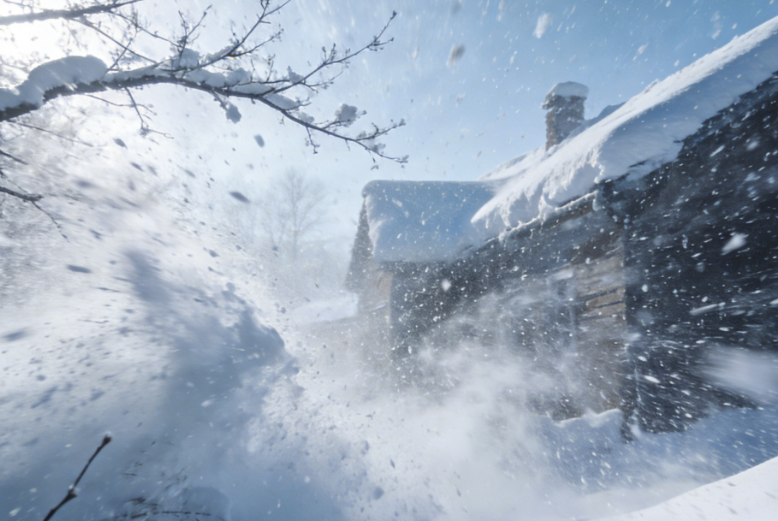
In terms of power supply, the blizzard caused severe damage to power facilities, and the scope of power outages continued to expand. According to data from the professional website PowerOutage.com, on the morning of Tuesday, about 240,000 households in Massachusetts, 36,000 in New Jersey, and 20,000 in Delaware were without power, with a total of more than 300,000 households affected.
It is reported that at the peak of the storm, the number of households without power reached 650,000, accompanied by strong winds exceeding 100 kilometers per hour, which further aggravated the damage to power facilities.
Travel was severely impacted, with air and ground transportation falling into chaos. On Tuesday, about 2,000 flights in the United States were canceled and nearly 1,000 flights were delayed, with the affected flights mainly concentrated at Boston Airport and New York Airport; from Sunday to Monday, more than 9,000 flights had been canceled, stranding a large number of passengers.
In terms of ground transportation, non-essential vehicle movement was still prohibited in the New England region, some railway lines were interrupted, and the remaining lines were forced to detour, with transportation in New Jersey and New York being the most affected.
Public services and daily operations were also significantly affected. The 153-year-old Boston Globe failed to publish its daily newspaper for the first time on Tuesday.
The newspaper stated on its website that "the conditions at that time made the printing and delivery of the newspaper impossible." It is understood that the Boston Globe, founded in 1872, is the largest-circulation newspaper in Boston, and this suspension is the first in its century-old history, which fully demonstrates the severity of the blizzard.
However, there have been signs of relief in some areas. In New York, with the rise in temperature, snow began to melt rapidly since Monday, and local schools resumed normal classes on Tuesday after several days of suspension.
At the same time, various regions actively carried out post-disaster response work. Zohanna Mamadani, Mayor of Zohanna City, issued another call to recruit volunteers to help clean the streets, offering a reward of 30 US dollars per hour. So far, more than 1,000 volunteers have signed up and have been engaged in snow removal work.
In addition, local emergency support work is also progressing in an orderly manner. Zohanna City officials said that although a previous cold wave in the area had caused about 20 deaths, multiple emergency shelters have been set up across the city. Since last Saturday, the authorities have placed about 250 homeless people in these shelters, making every effort to ensure the basic living safety of the people.
Meteorological departments predict that small-scale snowfall will occur again in the northeastern United States from Tuesday night to early Wednesday morning, which may have a certain impact on post-disaster cleanup and traffic recovery work.
At present, relevant local departments have made preparations for response, continuously monitored weather changes, and made every effort to reduce the impact of secondary disasters.
It is reported that this blizzard is one of the strongest winter storms in the northeastern United States in recent years. In essence, it is a "bomb cyclone", formed by the meeting of warm Atlantic air and Arctic cold air, with strong power and a wide impact range, bringing record snowfall and hurricane-force winds to the area.