Ukraine Attacks Russia's Druzhba Oil Pipeline, Triggering Multilateral Diplomatic and Energy Games
On the evening of Sunday (local time), the Ukrainian military launched a targeted attack on key nodes of Russia's "Druzhba" (also known as "Friendship") oil pipeline network, causing a major fire at an important oil depot owned by Russia's state-owned oil pipeline company (Transneft). The attack not only damaged Russia's energy transportation infrastructure but also triggered a series of chain reactions, exacerbating diplomatic and energy disputes between Ukraine and Hungary, Slovakia, and impacting the EU's Russia policy and its support plans for Ukraine.
It is reported that the target of the attack was an important oil extraction and transportation hub in Tatarstan, central Russia, and the attack caused multiple fires at the facility. As part of Ukraine's intensified offensive to weaken Russia's energy export economy and energy logistics, similar attacks also occurred simultaneously at the Unecha Station in Bryansk Oblast and the Ninorskoye Station in Tambov Oblast, both of which are core nodes of the "Druzhba" oil pipeline network and crucial to the overall operation of the pipeline. The Ukrainian military used long-range drones in this operation to accurately strike key pipeline facilities.
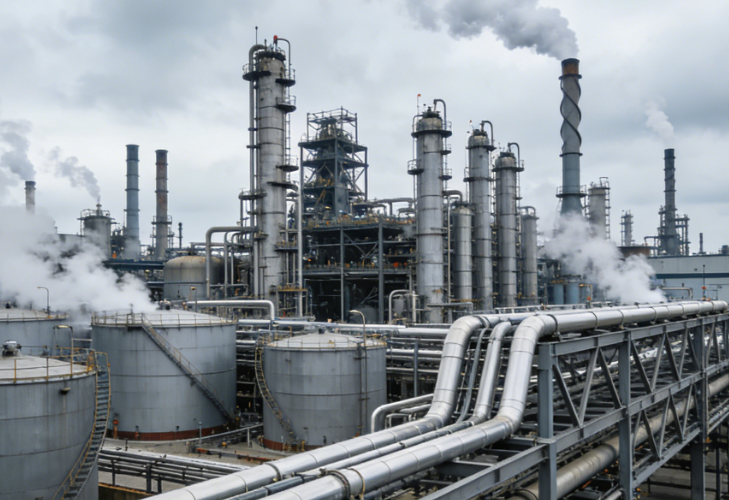
The attack directly led to the interruption of Russia's crude oil supply to Hungary and Slovakia via the "Druzhba" pipeline. It is understood that both Hungary and Slovakia are highly dependent on the southern branch of the pipeline for Russian crude oil. As EU member states, the two countries have obtained temporary exemptions, allowing them to bypass the EU's extensive ban on Russian energy and continue importing crude oil through this route to ensure their own energy security. After the supply interruption, the two countries quickly broke out in severe diplomatic and energy disputes with Ukraine, clearly accusing Kiev of deliberately interfering with oil transportation through the pipeline.
Officials from Hungary and Slovakia stated that there are no technical reasons for the pipeline interruption, directly referring to the oil supply suspension as "political blackmail" by Ukraine, and implying that the move is related to the stalemate over Ukraine's EU accession stance - Ukraine intends to exert political pressure on the two countries by blocking crude oil supply. It is reported that Hungary and Slovakia have long firmly opposed Ukraine's accession to the EU. Hungarian Prime Minister Viktor Orban has clearly stated that he will block the process of Ukraine's EU accession, with the core reason being that this move may bring the Russia-Ukraine conflict into the EU and threaten EU security.
In response to the above accusations, Ukraine clearly refuted them, calling the relevant claims "unfounded and irresponsible". Kiev stated that the interruption of crude oil supply was not caused by itself, but by Russian drone and missile attacks that damaged key infrastructure in western Ukraine, leading to the abnormal operation of the pipeline. Ukraine also emphasized that relevant maintenance work is in progress, but the maintenance process has been seriously hindered by Russia's continuous aggression, making it impossible to resume oil transportation in a timely manner.
Although both sides adhere to their own opinions, the incident did not ease the tension between all parties, but instead triggered a series of subsequent countermeasures. Hungary clearly stated that it will block a 90 billion euro EU loan program, which was originally intended to support Ukraine's military and economic needs, and is planned to be provided in batches between 2026 and 2027, of which 60 billion euros will be used for military needs and 30 billion euros for general budget support of the Ukrainian government. At the same time, Hungary also announced that it will veto the EU's 20th round of sanctions against Russia, which was originally planned to be implemented on the fourth anniversary of Russia's full-scale invasion of Ukraine, focusing on energy maritime transportation, financial blockades and technological restrictions, aiming to further reduce Russia's economic and war potential.
It is worth noting that as EU member states still heavily dependent on Russian crude oil, the countermeasures of Hungary and Slovakia have also exposed divisions within the EU on Russia sanctions, support for Ukraine and energy policies. Hungarian Minister of Foreign Affairs and External Economic Relations Peter Szijjarto has clearly stated that as long as Ukraine does not resume oil transportation through the "Druzhba" pipeline, Hungary will block all EU-level decisions favorable to Ukraine. To resolve the pipeline-related disputes, Hungarian Prime Minister Orban has reached an agreement with Slovak Prime Minister Fico to establish a joint investigation committee to investigate the current situation of the "Druzhba" oil pipeline and call on Ukraine to allow investigators from the two countries to enter the scene to promote the restart of the pipeline.
Faced with the current multiple stalemates, the European Commission has called for an extraordinary meeting to coordinate the positions of all parties, resolve differences, and promote the proper settlement of relevant issues. For its part, Ukraine stated that the dissatisfaction of Hungary and Slovakia should not be directed at Kiev, but at the Kremlin, emphasizing that Russia's continuous aggression is the root cause of the energy supply interruption and related disputes. At present, all parties are still in a stalemate, and it remains to be further observed when the "Druzhba" oil pipeline will resume operation and whether the EU's sanctions against Russia and its loan program to Ukraine can proceed.