UK Launches Consultation on Downstream Oil Industry Strategy; Industry Calls for Protection of Remaining Refineries
On Monday (local time), the UK government officially released a consultation paper on the future development of the country's downstream industry, while simultaneously launching a relevant evidence-gathering process, aiming to lay a solid foundation for the introduction of a special development strategy for the downstream oil industry in the autumn of 2026. At the same time, the UK Petroleum Industry Association issued an urgent appeal, urging the government to quickly take targeted actions to protect the country's only remaining four refineries and prevent them from falling into a closure crisis.
It is reported that the UK Department for Energy Security and Net Zero has officially launched the evidence-gathering work, whose core goal is to fully grasp the development difficulties and core needs of the downstream oil industry. By systematically sorting out the current development situation of the industry and judging the development trend, it will formulate a development strategy that is in line with the actual situation of the industry, and has both feasibility and forward-looking, so as to promote the organic connection between sustainable development and the net-zero goal in this field.
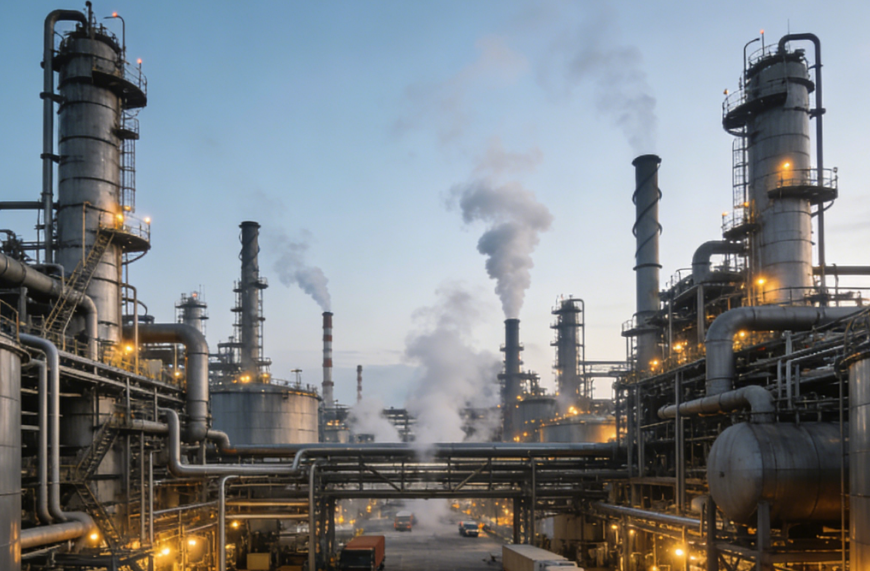
Relevant industry data show that in the past year, two refineries in the UK have successively ceased operations. Up to now, only four refineries nationwide are maintaining normal operations, namely the Prax Lindsey Refinery in Lincolnshire and the Grangemouth Refinery in Scotland, etc. The number of refineries has dropped to the lowest level in modern history. As a key component of the UK's fuel supply guarantee and energy security system, the survival status of refineries is directly related to the country's energy self-sufficiency capacity and energy security and stability.
The UK government clearly stated in the consultation paper that domestic refineries are currently facing multiple development challenges, mainly including the continuous downward trend of domestic fuel demand, the increasingly fierce international market competition—emerging refineries from the Middle East, Asia and Africa have gradually seized market share by virtue of cost advantages, the prominent problem of aging plant infrastructure that urgently needs upgrading and renovation, the high energy costs, and the additional cost pressure brought by carbon emission control. These multiple factors have jointly squeezed the living and development space of local refineries.
As an industry organization representing relevant enterprises that supply energy to more than 85% of the UK's transportation sector, the UK Petroleum Industry Association affirmed the government's initiative to launch the evidence-gathering work, stating that this action "provides an important opportunity to effectively address the severe challenges currently facing the industry". The association also issued a warning that the current only four remaining refineries have significantly increased the UK's sensitivity to global situation fluctuations in terms of fuel and related product supply, and the potential risks to energy security are constantly rising.
The association further pointed out that UK domestic refineries need to bear up to 400 million pounds (approximately 540 million US dollars) in carbon emission-related costs every year, while competitors in the international market usually do not need to bear such costs. This has led to an unfair competitive advantage for imported fuels in the entire supply chain, seriously weakening the core competitiveness of the UK's domestic refining industry. It is understood that the UK refining industry has previously encountered development shocks due to multiple problems such as high costs and intensified market competition, and many enterprises have fallen into operational difficulties.
To address the industry's development difficulties and create a fair and orderly market competition environment, the UK Petroleum Industry Association put forward clear suggestions, calling on the UK government to accelerate the implementation of the Carbon Border Adjustment Mechanism (CBAM), and strive to officially introduce this mechanism by January 2028 to ensure that imported fuels bear the same carbon costs as UK domestic fuels, promoting the fair competition and healthy development of the industry.
Elizabeth de Jong, Chief Executive Officer of the UK Petroleum Industry Association, emphasized that if the government fails to promptly introduce emergency policy measures to improve the industry's competition environment, the UK will face multiple problems such as job losses and indirect increases in carbon emissions, and may fall into the development dilemma of "deindustrialization", making it difficult to achieve the true goal of energy decarbonization. At present, all sectors of the industry are closely watching the UK government's follow-up measures, hoping that the relevant development strategies can effectively respond to the core demands of the industry and help the domestic refining industry get out of the development difficulties and achieve sustainable development.